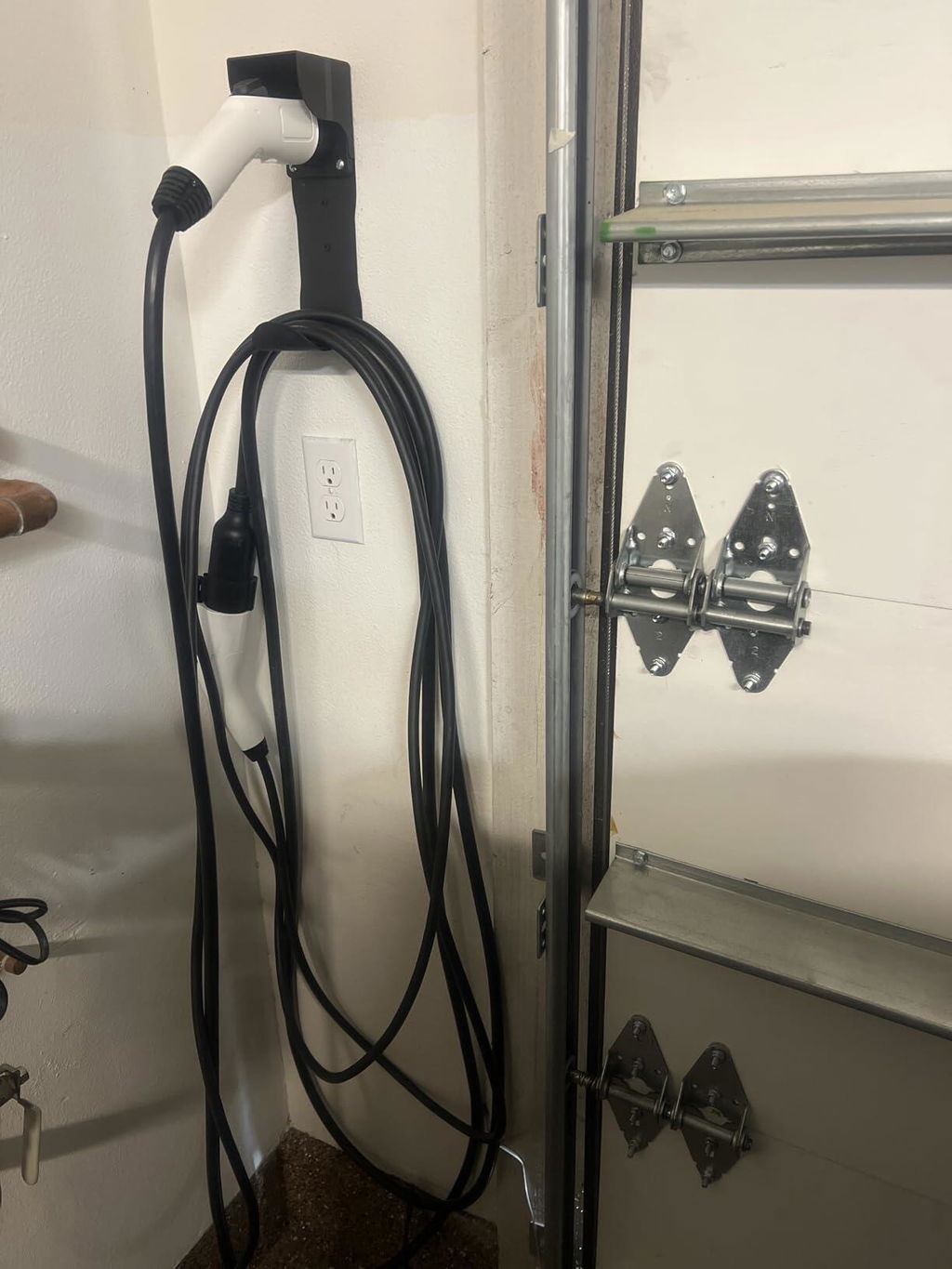
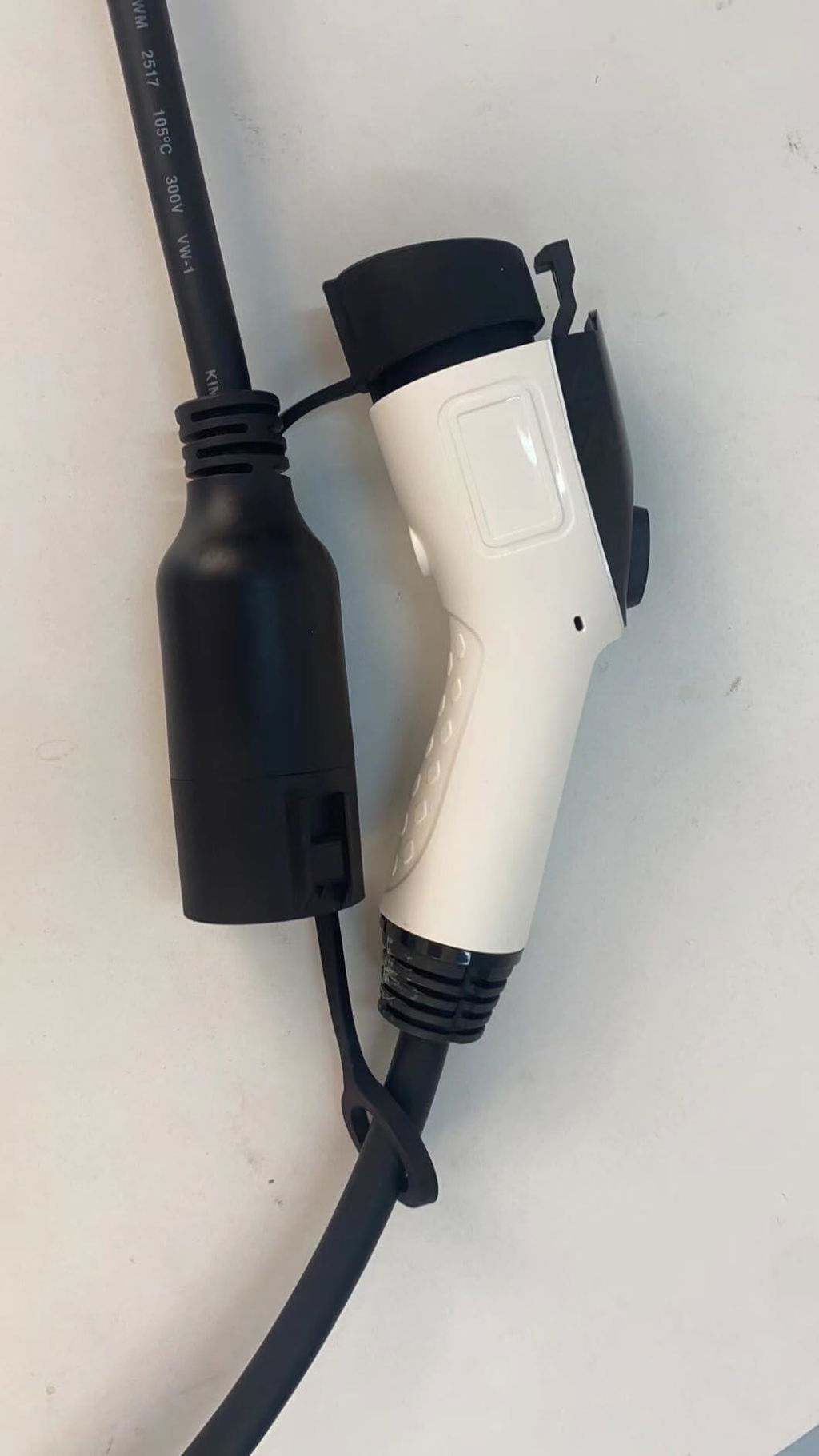
WenStorm J1772 EV Extension Cable for Level 2 Charging
Yes — a J1772-to-J1772 extension cable safely adds vehicle-side reach when it uses heavy-gauge copper conductors and carries the SAE J1772 control-pilot signal through unmodified. The WenStorm J1772 EV Extension Cable does exactly that: 21 to 50 feet of vehicle-side reach, 32A or 50A variants, silver-plated copper contacts, and >10,000 mate/unmate cycle life — without extending the wall-outlet side of the charger.
Not a wall-outlet extension. This is a vehicle-side cable — it goes between the EV charger's built-in J1772 connector and the car's charging inlet, never between the wall outlet and the charger. If your problem is the wall outlet being too far from the parking spot, install a properly rated dedicated circuit closer to the vehicle instead; household and NEMA extension cords are generally not appropriate for continuous EV charging. See Can You Use an Extension Cord With an EV Charger? for the full supply-side vs vehicle-side breakdown.
Tesla note: Tesla's Gen 2 Mobile Connector owner's manual prohibits supply-side extension cords. For a NACS-to-NACS vehicle-side extension for a Tesla or NACS-connector EV, see the Tesla/NACS Extension Cord and confirm your specific EVSE's instructions permit an extension before using one.
Compare across the extension line: Tesla/NACS Extension Cord (for NACS-connector EVs) · Buyer's Guide: J1772 vs NACS (decision framework) · Is 25 ft enough? (length-planning framework).
Can you use an extension cable with a J1772 EV charger?
Yes — on the vehicle side. The extension inserts between the EVSE's built-in J1772 connector and your car's J1772 inlet, adding 21 to 50 feet of reach. It does not extend the wall-outlet side of a portable EVSE (that would be a household extension cord, which is not designed for continuous EV charging loads). The safety topology is preserved: the EVSE still monitors the wall receptacle; the extension carries the same SAE J1772 control-pilot and proximity signals the EVSE would carry directly to your car.
Setup order: wall outlet → EVSE → WenStorm J1772 extension → vehicle. If the outlet itself is too far from your parking spot, the preferred fix is a licensed electrician installing an outlet closer to the parking area — an extension is the second-best answer, not the first.
Which WenStorm variant should I buy?
- 32A EVSE (typical home Level 2 portable, Tesla Mobile Connector, WenStorm Level 2 Portable Charger) — the 32A 21-ft variant is the entry pick. Step up to 25/30/40/50-ft 50A variants for extra length headroom.
- 40A EVSE (Emporia plug-in, Wallbox 40A, Grizzl-E Classic) — 50A variant required. The 32A cable would overheat under continuous 40A load.
- 48A EVSE (Emporia hardwired, Wallbox 48A, Grizzl-E Ultimate 48A, Tesla Wall Connector) — 50A variant only.
- >50A EVSE (Ford Charge Station Pro 80A, Grizzl-E Ultimate 80A) — exceeds this cable's rating. Use a longer-cable EVSE or hardwire relocation instead.
Match the extension's amperage rating to your EVSE's continuous output, not your vehicle's onboard charger. For the full length + amperage decision matrix, see the EV Extension Cable Buyer's Guide.
Key features
Vehicle-side extension only — not for the wall-outlet side
Extends the EVSE-to-vehicle charging connection: wall outlet → EVSE → WenStorm extension → vehicle. It is not for extending the wall-outlet side of an EVSE (that's household extension cord territory — see the FAQ below for the safety reason).
Available lengths and current ratings
Five length options — 21 ft, 25 ft, 30 ft, 40 ft, 50 ft — in two current ratings: 32A (32A variant) or 50A (50A variant) at 240V continuous. Match the amperage rating to your EVSE's maximum output, not your vehicle's onboard charger. See the "Which WenStorm variant should I buy?" section above for the EVSE-to-variant mapping.
Silver-plated copper contacts
Both J1772 connector ends use silver-plated copper contact pins. Silver has higher conductivity than brass or bare copper, reducing resistance heat at the plug-to-plug junction during long charging sessions. This matches what competing premium brands charge extra for.
Amperage-matched conductor gauge
Heavy 8 AWG copper power conductors on the 50A variant (10 AWG on the 32A variant), sized per NEC 310.16 ampacity tables to carry continuous EV load without overheating. Full construction: 2×8 AWG power + 1×10 AWG equipment ground + 2×18 AWG signal on the 50A variant.
SAE J1772 signaling compliant
The extension carries the J1772 control-pilot and proximity signals through the cable without modification, so your existing EVSE and vehicle recognize the assembly as a normal continuous conductor and do not throw fault codes.
>10,000 mate/unmate cycle life
Tested to more than 10,000 no-load mate/unmate cycles. At one plug/unplug per day, that's 27+ years before mechanical wear reaches the tested limit.
Wide operating envelope — cold-flexible and heat-tolerant
Rated for continuous operation across -30°C to +50°C (-22°F to +122°F) and altitudes up to 2,000 m (6,562 ft). Cold-flexible for Minnesota-winter garage use; heat-tolerant for Phoenix-summer driveway installation.
Built with UL 2263-certified EV cable
The cable component is built to UL 2263 (the standard for EV cable jacket and conductor construction) — see the WenStorm Certification Center for the specific component listing. Each product's certification governs its own rated output and use conditions.
Flame-retardant TPU cable jacket
Flame-retardant TPU compound stays flexible at typical winter garage temperatures, rated for outdoor use across -30°C to +50°C, and resists UV degradation.
Compatible with all SAE J1772 chargers and vehicles
Works with any J1772-connector EVSE — WenStorm, ChargePoint Home Flex, Grizzl-E, JuiceBox, Lectron, Wallbox, Emporia, and OEM Level 1/2 cordsets. On the vehicle side, works with any J1772-inlet EV or plug-in hybrid, and with Tesla vehicles via a standard J1772-to-Tesla adapter.
Frequently asked questions
Does the extension cable reduce charging speed?
Not meaningfully within the cable's rated envelope. At 32A on the 21-ft variant, voltage drop is about 0.5% at 240V — well within NEC's 3% branch-circuit recommendation. At 50 ft and 50A, drop rises to roughly 2% — still below any onboard-charger derating threshold. If you notice slower charging, check the EVSE's app or display first; most modern EVSEs derate for connector temperature or utility load management, not for the cable.
Can I use the 50A extension cable with a 32A charger?
Yes. The cable's rating is a ceiling, not a floor. A 50A-rated cable safely carries any current up to 50A, so it works with 32A, 40A, and 48A EVSEs. You cannot go the other direction — a 32A cable will overheat under a 40A or higher EVSE.
Can I use it outdoors?
Yes. The SAE J1772 connector standard is designed for outdoor operation, and the WenStorm cable jacket is flame-retardant TPU rated for -30°C to +50°C. Seat both connectors fully and keep the coupler junction off the ground; verify the assembled SKU's documented IP rating on the product page before permanent outdoor installation.
Can I connect two extension cables together (chain them)?
No. Every additional coupler introduces resistance and a potential failure point. Buy one extension of the correct length rather than combining two shorter ones. NEC 400.12 restricts flexible-cord routing, including chained use.
Does it work with every J1772 EV?
Yes — with any J1772-inlet EV or plug-in hybrid (Chevy Bolt, Ford Mustang Mach-E, Ford F-150 Lightning, VW ID.4, Hyundai Ioniq 5/6, Kia EV6/EV9, Nissan Leaf, Audi Q4 e-tron, and many others), and with Tesla vehicles via a standard J1772-to-Tesla adapter on the vehicle side.
Is this different from a NEMA extension cord?
Completely different. A J1772 extension has J1772 connectors on both ends (physically incompatible with wall receptacles) and carries the SAE J1772 control-pilot and proximity signals. A NEMA extension cord has standard household plugs (5-15, 6-20, 14-50, etc.) and cannot go between an EVSE and a vehicle. Never use a NEMA extension cord between a wall outlet and an EVSE — every major EVSE manufacturer prohibits this. See Can You Use an Extension Cord With an EV Charger? for the safety rationale.
Should I buy this or replace my charger with a longer-cable one?
Buy the extension if you already own a Level 2 charger you like and just need 10-25 extra feet of occasional reach (parking in a second spot, RV park connections, workplace or travel use).
Buy a new longer-cable charger instead if you don't yet own a Level 2 charger, or if you regularly need more than about 40 ft of total reach from the wall. The WenStorm 32A NEMA 14-50 portable ships with a 25 ft cable and connector-integrated electronics — a purpose-built fixed cable has fewer connection points to inspect than a charger + extension setup.
Related reading
- EV Extension Cable Buyer's Guide: J1772 vs NACS, Length, and What Not to Do — the full connector + length + voltage-drop walkthrough
- Can You Use an Extension Cord With an EV Charger? — safety-corrective answer for the wall-outlet-side question
- Is a 25-Foot EV Charger Cable Long Enough? — how to measure the routed path from EVSE to vehicle
What's in the box
- WenStorm J1772 EV extension cable in your selected length and amperage
- Dust caps for both connector ends
- Storage bag
- Quick-start guide
You may also like
Frequently Asked Questions
Find quick answers about compatibility, plug types, outlet matching, and charging speed.
Will using this extension cord void my EV or charger warranty?
Not typically. Car owner manuals warn against using standard household extension cords on the wall side of a Level 1 charger — those cannot handle continuous EV loads and are a real fire risk. A purpose-built J1772-to-J1772 extension on the car side is a different product category: it is designed and rated for continuous EV loads, meets SAE J1772 signaling requirements, and is built with UL 2263-certified EV cable (Cert No. UL-US-2407470-0). Automaker warranty policies generally cover the vehicle's battery and onboard charger against defects, not against specific charging accessories, provided the accessory is safety-listed and correctly sized. If you have specific concerns, check your automaker's owner-manual language on aftermarket charging equipment — it typically distinguishes between "extension cords" (household NEMA) and "EVSE equipment." See what other owners found: Charging cable is a couple feet too short — any extension that won't void the warranty?
Will it work with my Tesla if I use a J1772-to-Tesla adapter?
Yes. The extension does not interfere with adapter operation — you plug your existing charger's J1772 connector into the extension's female end, then plug a standard J1772-to-Tesla adapter into the extension's male end, and finally into your Tesla's charge port. Each connection point should be inspected for heat during the first few sessions; more connections mean more places to check.
Will it work with my ChargePoint Home Flex, Grizzl-E, JuiceBox, or Lectron?
Yes. This is a standard SAE J1772 extension and works with any J1772-connector EVSE, including all major residential brands (ChargePoint Home Flex, Grizzl-E Classic and Duo, JuiceBox 40/48, Lectron, Wallbox Pulsar Plus, Emporia, Enel X). The extension does not modify signaling, so smart chargers with fault detection do not treat it as a fault condition.
Will it trigger a fault code on my charging station?
Not on properly designed EVSEs. Some smart chargers monitor cable resistance and can throw a ground-fault or continuity-fault code if a cheaply built extension introduces too much resistance or breaks the pilot signal. This extension uses heavy-gauge copper and pass-through J1772 signaling specifically to stay within acceptable resistance and signal-integrity thresholds. If your charger throws a fault immediately after adding the extension, first check that both connectors are fully seated and the latch is engaged.
Can I use this on a Level 1 (120V) charger?
Yes, but Level 1 only draws 12–16A, so the extension's 32A or 50A rating is far more than needed. The safer and cheaper option for extending Level 1 reach is usually to move to a Level 2 setup entirely, or to have an electrician install an outlet closer to your parking spot. See our guide: Level 1 vs Level 2 EV Charging: What's the Real Difference?
Can I leave the connection outside in rain or snow?
Yes. Both connector ends and the plug-to-plug junction are IP66-rated, which means dust-tight and protected against high-pressure water jets. IP66 is a stronger rating than IP55 used on most portable EV chargers, and is appropriate for permanent outdoor installation, driveway charging in heavy rain, and unheated garages. Never plug or unplug during heavy rain, and never leave a plug lying in standing water. Related discussion: Does 'IP66 rated' actually tell you anything about cold-weather performance?
Will the cable get stiff in freezing winter temperatures?
The TPU jacket is designed to remain flexible in typical winter garage temperatures. In extreme cold (well below freezing), all EV cables become stiffer to some degree — this is normal and reversible; the cable returns to full flexibility once warmed. Related reading: Why Your EV Charger Cable Gets Stiff in Cold Weather (And Why It Matters for Your Wall Outlet)
Can I drive over the cable without damaging it?
Occasional slow rolling over the cable body (not over the connectors) with a passenger vehicle will not damage it — the TPU jacket is designed to handle typical driveway crush loads. Avoid driving over the connector ends, avoid parking with tire weight resting continuously on the cable, and inspect for jacket damage periodically if the cable regularly crosses a driveway. Never drive a large vehicle (truck, van, delivery vehicle) over any part of the cable.
Are the internal pins silver-plated or copper?
Silver-plated. Silver plating has lower contact resistance than standard brass or bare copper, which reduces heat buildup at the connector during long charging sessions — the connector junction is one of the most common heat-failure points on cheaper extensions.
What warranty comes with the extension cable?
A 2-year limited warranty from the date of purchase, covering manufacturing defects and workmanship under normal use conditions. Full terms are on the return & refund policy page.
Warranty, Shipping & Returns
Warranty
All WenStorm products are covered by a 2-year limited warranty from the date of purchase, covering manufacturing defects and workmanship issues under normal use. Damage from misuse, improper installation, accidents, or modifications isn't covered. To make a claim, email contact@wenstormcharge.com with your order number and a description of the issue.
Shipping & Returns
Returns are accepted within 30 days of your order date for items in original, unused condition with original packaging. No restocking fee applies within that window. Return shipping is the customer's responsibility. All returns need prior authorization — email contact@wenstormcharge.com with your order number before sending anything back.
Refund Timeline
Once we receive and inspect your returned item, refunds are processed to your original payment method within 48 hours. Your bank or card issuer may take additional time to post it to your account.