Level 1 vs Level 2 EV Charging: What's the Real Difference?

TL;DR
Level 1 (120V outlet): 2–4 mi/hr range — enough for drivers under 20 mi/day plugged in overnight. Level 2 (240V outlet): 18–35 mi/hr range, 6–8× faster — required for 30–60 mi/day drivers. Getting Level 2 doesn't require installation if you already have a 240V outlet within reach (dryer, RV hookup, workshop) — a portable Level 2 charger with the matching plug is often all it takes.
The One-Number Difference That Changes Everything
The core difference is how many miles of range you recover per hour of charging. Everything else — cost, convenience, overnight results — flows from that single number.
Level 1 Charging (120V)
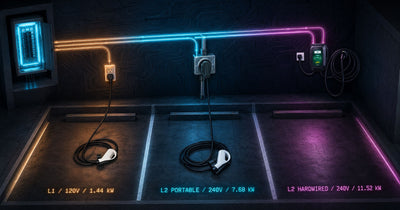
A standard wall outlet delivers 120V at up to 12A, adding approximately 2–4 miles of range per hour. On a 75 kWh battery, a full charge from empty takes 40–50 hours.
For drivers who cover 10–20 miles daily and leave the car plugged in overnight, Level 1 works. For commuters driving 30–60 miles a day, the math doesn't add up — especially in winter when range drops and charging slows further.
Level 2 Charging (240V)
A 240V outlet at 24–40A delivers 18–35 miles of range per hour — a 6–8x improvement over Level 1. The same 75 kWh battery charges from empty in 6–12 hours depending on the outlet and charger.
At Level 2, virtually every EV owner wakes up to a full battery every morning regardless of how much they drove the day before.
Level 1 vs Level 2 — Full Comparison
| Level 1 | Level 2 (Dryer Outlet) | Level 2 (NEMA 14-50) | Wall-Mounted L2 | |
|---|---|---|---|---|
| Voltage | 120V | 240V | 240V | 240V |
| Max Current | 12A | 24A | 32–40A | 40–48A |
| Range Per Hour | 2–4 mph | 15–22 mph | 25–35 mph | 30–44 mph |
| Full Charge (75 kWh) | 40–50 hrs | 9–12 hrs | 6–8 hrs | 5–7 hrs |
| Equipment Cost | $0 | $40–$200 | $40–$250 | $300–$800 |
| Installation | None | None | None | Required |
| Portable | Yes | Yes | Yes | No |
The wall-mounted Level 2 charger delivers the fastest home charging speed — but it's also the most expensive path. The portable Level 2 options (adapter or standalone charger) deliver overnight performance that's nearly identical, at a fraction of the cost.
What Does This Mean Overnight? (Real Numbers)

Starting from 20% battery (approximately 65 miles of range) in a Model Y Long Range or similar 75–82 kWh EV, plugged in at 10pm and unplugged at 7am (9 hours):
| Charging Method | Battery at 7am | Range Added |
|---|---|---|
| Level 1 (wall outlet) | ~28–32% | ~40–45 miles |
| Level 2 — dryer outlet (24A) | ~85–90% | ~155–170 miles |
| Level 2 — NEMA 14-50 (32A) | ~100% (full) | ~200+ miles |
| Wall-mounted Level 2 (40A) | ~100% (full) | ~220+ miles |
For the average commuter driving 40 miles a day, Level 1 barely keeps pace. One errand-heavy day wipes out the overnight buffer, and you start the next morning already behind.
Level 2 from any 240V outlet — dryer, garage, or RV hookup — restores a full day's driving and then some, with enough overhead for longer days.
Do You Need to Install Anything for Level 2?
This is where most guides get it wrong. They assume Level 2 charging requires calling an electrician and mounting a wall unit. For the majority of homeowners, that assumption is false.
If your home has any of these outlets, you can start Level 2 charging tonight:
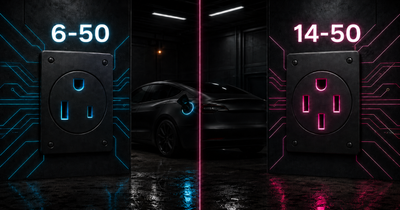
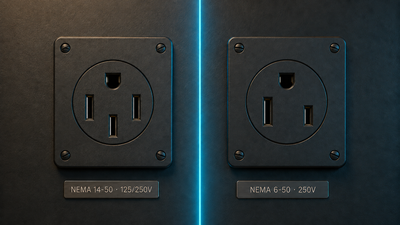
- NEMA 14-50 (4-prong, L-shaped top-left slot) — garage or utility room
- NEMA 14-30 (4-prong, all straight slots) — standard dryer outlet
- NEMA 10-30 (3-prong) — dryer outlet in homes built before mid-1990s
- NEMA 6-50 (2 flat blades + round ground) — workshop or welder outlet
Check your garage and laundry room before assuming you need new wiring. A NEMA 14-50 in the garage — common in homes built for RV hookups or workshop tools — is the ideal setup. A dryer outlet (14-30 or 10-30) works just as well for overnight charging.
For a complete outlet identification guide, see How to Charge Your EV at Home Without Installation →
When Level 1 Is Actually Fine
Level 1 charging gets a worse reputation than it deserves — in the right situation.
Level 1 works well if you:
- Drive 20 miles or fewer per day consistently
- Can leave the car plugged in for 8–12 hours overnight
- Have access to public Level 2 for occasional longer trips
- Are in a situation where no 240V outlet is accessible
Urban dwellers using street parking, renters without garage access, or second-car EV owners who drive infrequently are the real Level 1 use case. For everyone else, the 6–8x speed difference makes Level 2 the right default.
How to Get Level 2 Charging Tonight (No Installation)
Once you've confirmed a 240V outlet near your parking spot, the upgrade path is straightforward.
For Tesla Owners with a Gen 2 Mobile Connector
Your Tesla's Gen 2 mobile connector has an adapter slot on the side of the connector body. A WenStorm NEMA adapter plugs directly into that slot, converting your mobile connector from a Level 1 device to a full Level 2 charger.
- NEMA 14-50 outlet → WenStorm 14-50 adapter → charges at up to 32A
- Dryer outlet (14-30) → WenStorm 14-30 adapter → charges at up to 24A
- Older dryer outlet (10-30) → WenStorm 10-30 adapter → charges at up to 24A
- Workshop outlet (6-50) → WenStorm 6-50 adapter → charges at up to 32A
Cost: ~$40. Zero installation. Works tonight.

Shop WenStorm Tesla NEMA Adapters →
For All Other EVs (and Tesla Gen 3)
If you drive a Ford, Chevy, Hyundai, Rivian, or any non-Tesla EV — or a Tesla with the newer Gen 3 connector — you need a standalone portable Level 2 charger. The WenStorm Portable Level 2 Charger plugs directly into a NEMA 14-50 outlet and charges at up to 32–40A via J1772 connector.
Cost: ~$150–$250. No installation. Works with all J1772-compatible EVs.
Shop WenStorm Portable Level 2 Charger →
Level 3 / DC Fast Charging — Where It Fits
Level 3 (DC Fast Charging) is the third tier — not available for home use, but worth understanding.
DC Fast Chargers deliver 50–350kW directly to the battery, bypassing the onboard charger entirely. They add 100–200 miles in 20–30 minutes. Tesla Superchargers and public CCS stations are Level 3.
Level 3 is for road trips and urgent top-ups — not daily charging. The hardware costs $20,000+ per unit and requires three-phase commercial power. Home charging is Level 1 or Level 2. Period.
If you're often tempted by public fast chargers because home charging is too slow, the solution is upgrading to Level 2 at home — not relying on public infrastructure for your daily routine.
FAQ
What is the difference between Level 1 and Level 2 EV charging?
Level 1 uses a standard 120V wall outlet (like any household socket) and adds 2–4 miles of range per hour. Level 2 uses a 240V outlet (like a dryer or garage circuit) and adds 18–35 miles per hour — 6–8x faster. The difference is the outlet, not the car.
Is Level 1 charging good enough for daily use?
It depends on how far you drive. If you drive 20 miles or fewer per day and can leave the car plugged in overnight, Level 1 is adequate. For commuters driving 30–60 miles daily, Level 1 often falls short — especially in winter when range decreases and charging slows. Portable Level 2 is the recommended upgrade for daily drivers.
How much faster is Level 2 than Level 1?
Level 2 from a NEMA 14-50 outlet charges at approximately 28–35 miles of range per hour, versus 2–4 miles per hour from Level 1. That's roughly 6–8x faster from the same car and mobile connector — simply by plugging into a 240V outlet instead of 120V.
Do I need to install anything for Level 2 home charging?
Not if you already have a 240V outlet accessible near your parking spot. A NEMA 14-50 (garage/RV outlet), NEMA 14-30 or 10-30 (dryer outlet), or NEMA 6-50 (workshop outlet) all support portable Level 2 charging without any new wiring. Tesla Gen 2 owners use a NEMA adapter (around $40); all other EV owners use a standalone portable Level 2 charger.
Can I get Level 2 charging without a wall unit?
Yes. Portable Level 2 chargers and NEMA adapters plug directly into existing 240V outlets and deliver the same overnight charging performance as wall-mounted units — at 10–20% of the installed cost. WenStorm adapters and portable chargers are ETL certified and include the same safety systems (thermal protection, ground fault detection, current limiting) as hardwired equipment.
What equipment do I need for Level 2 charging at home?
Tesla Gen 2 owners need only a NEMA adapter that matches their existing 240V outlet (around $40 from WenStorm). All other EV owners need a portable Level 2 charger that plugs into a NEMA 14-50 (around $150–$250). Neither requires installation, permits, or an electrician — just a compatible 240V outlet within reach of your parking spot.
The Outlet You Already Have May Be Enough
Most people reading this article have access to a 240V outlet somewhere in their home. The dryer outlet in the laundry room. The 4-prong socket in the garage. The RV hookup on the side of the house.
Check those outlets before spending $1,500 on a wall-mounted charger. The right adapter or portable Level 2 charger plugs in tonight — no installation, no electrician, no permit.
Shop WenStorm No-Install Level 2 Charging Solutions →
Not sure which product fits your setup? Use the WenStorm Charging Solution Finder →