Can You Use an Extension Cord With an EV Charger?

TL;DR
Generally, no. Do not place a household, RV or other supply-side extension cord between a wall outlet and an EV charger unless the charger manufacturer expressly permits that exact arrangement. Wire gauge alone does not make it approved. A vehicle-side J1772 or NACS extension is a different product category, but its rating, compatibility, complete-product certification, permitted cable length and manufacturer instructions must still be verified.
Wall-side vs. vehicle-side extensions — which do you actually need?
"Extension cord for EV charger" means two completely different products depending on which end of the charging setup needs extending. The one-table decision below is the simplest way to tell them apart.
| Wall-side extension (supply-side) | Vehicle-side EV extension cable | |
|---|---|---|
| Goes between | Wall outlet ↔ EVSE/mobile connector plug | EVSE handle ↔ vehicle charge port |
| What it extends | The AC power feed to your charger | The charger's J1772 or NACS cord |
| Carries what signal | Raw 120 V or 240 V AC — no EV handshake | SAE J1772 (or NACS) pilot signal + AC + ground |
| Manufacturer stance | Nearly all EVSE manufacturers prohibit this. See NHTSA 16E-091 (adapter failures with Mobile Connector) and manufacturer manuals for scope. | Permitted by many EVSE manufacturers IF the extension is a listed J1772-to-J1772 (or NACS-to-NACS) cable rated for the circuit. |
| Example product | Any household / RV extension cord with a NEMA plug on both ends — not an EV product | WenStorm J1772 EV Extension Cable · WenStorm Tesla/NACS Extension Cord |
| Our stance | Avoid. Fix the outlet location or install a longer EVSE instead. | Acceptable with the right product + the NEC 625.17(C) 25 ft total-length rule respected (see below). |
The rest of this article assumes you've located yourself on this table. Wall-side readers should read the "Why ordinary extension cords can be risky" and "If you're a renter" sections. Vehicle-side readers should jump straight to the "Do I need a bigger wire gauge?" wire-gauge table and the NEC 625.17(C) length rule below it.
| Extension type | Location in the charging path | General answer |
|---|---|---|
| Household / NEMA cord | Wall outlet → EVSE | Generally prohibited unless expressly permitted by the EVSE manufacturer. |
| J1772 extension | EVSE connector → vehicle | May be usable after rating, certification and compatibility checks. |
| NACS / Tesla extension | EVSE connector → vehicle | Equipment-specific — check the EVSE and vehicle instructions. |

WenStorm J1772 EV Extension Cable
21 to 50 ft, 32A or 50A. Built with UL 2263-certified EV cable (UL-US-2407470-0). For Bolt, Ioniq, Rivian, Mach-E, and any other J1772 EV.
Buy It NowFrom $129.99
WenStorm Tesla/NACS Extension Cord
50A across all lengths (21 to 50 ft). Built with UL 2263-certified EV cable (UL-US-2407470-0). Confirm your specific Tesla or NACS EVSE's manual permits an extension first.
Buy It NowFrom $169.99Compare in the Buyer's Guide →
Table of contents
- Wall-side vs. vehicle-side extensions — which do you actually need?
- Why ordinary extension cords can be risky for EV charging
- Related NHTSA history — the 2016 Tesla adapter recall
- Check your specific EVSE's manual before extending
- Do I need a bigger wire gauge if my extension cord is long — or if I'm charging at 48 amps?
- U.S. electrical-code note — NEC 625.17(C)
- If you're a renter or apartment dweller — the honest options
- Warning signs — stop charging and inspect
- Frequently asked questions
- Related reading
Why ordinary extension cords can be risky for EV charging
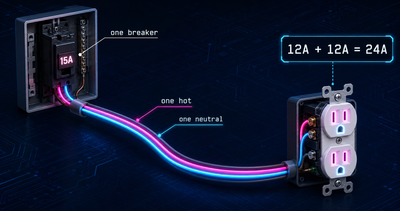
An extension cord inserted between the wall receptacle and an EV charger creates additional electrical connections in the charging path. Each new mating surface is a potential failure point under continuous Level 2 load, and each may sit outside the safety envelope the EV charger's manufacturer designed and tested for.
- Continuous load. EV charging can run for many hours, so a weak receptacle, undersized conductor, or high-resistance connection can generate heat over time.
- Additional connections. Every added plug-and-receptacle junction creates another potential high-resistance point.
- Voltage drop. Longer conductors increase voltage drop, particularly when the added cord's gauge is undersized for the load. This can trigger charger derating or fault codes, and it wastes energy as heat.
- Weather and physical exposure. Added junctions may sit in rain, standing water, doors, vehicle tires, or foot traffic — none of which the EVSE's original design accounts for.
- Manufacturer restrictions. Some EVSE manufacturers — including Tesla for its Gen 2 Mobile Connector — explicitly prohibit supply-side extension cords. Extending against those instructions may conflict with the equipment's safety listing and the manufacturer's warranty.
Tesla-specific example: Tesla documents temperature monitoring at multiple locations inside the Gen 2 Mobile Connector, including at the wall-plug interface. Tesla's Gen 2 Mobile Connector owner's manual explicitly prohibits using an extension cord to plug in the Mobile Connector. Inserting an extension between the wall and the Mobile Connector plug means the Tesla adapter is now connected to the extension's receptacle rather than directly to the building outlet — this moves Tesla's wall-plug temperature sensing away from the building receptacle where receptacle-side failures typically originate. See the Tesla Gen 2 Mobile Connector manual for the exact prohibition language.
For other EVSE brands (ChargePoint Home Flex, Wallbox Pulsar Plus, Emporia EV Charger, Grizzl-E, JuiceBox, etc.), read your specific unit's owner manual and installation guide. Some brands specify a directly-plugged connection; others document specific input-cable lengths; the reasons cited vary. Do not assume the Tesla-specific temperature-monitoring architecture applies to every brand — treat each manufacturer's guidance as authoritative for their own product.
Related NHTSA history — the 2016 Tesla adapter recall
In 2016, Tesla issued NHTSA recall 16E-091 covering specific NEMA 14-30, 10-30, and 6-50 adapters used with the Mobile Connector. Per the recall report, the root cause was poor ultrasonic welds inside the adapter housings, which contributed to elevated internal resistance and heat. The remedy was replacement adapters with improved construction and lower internal resistance — not a firmware or sensor change.
Even Tesla-approved factory adapters have failed under continuous EV load because of construction issues invisible from the outside. That's a cautionary point for anyone considering an aftermarket cord or adapter that hasn't been specifically tested and listed for EV charging duty — not a claim that this specific recall proves any particular sensor architecture is universal.
Check your specific EVSE's manual before extending
Every EVSE manufacturer's installation guide or owner's manual is the authoritative source for whether — and how — an extension cord may be used with that specific product. There is no substitute for reading the document that came with your unit.
Documented examples:
- Tesla Gen 2 Mobile Connector: the owner's manual explicitly prohibits using an extension cord to plug in the Mobile Connector. See the Tesla Gen 2 Mobile Connector manual.
- Tesla Wall Connector: designed and listed for hardwired installation. There is no supply-side cord to extend.
- ChargePoint Home Flex: the installation guide specifies a nearby outlet for the 12-inch input cable. Confirm whether your specific model permits any extension arrangement before adding one.
For any other brand (Wallbox, Emporia, Grizzl-E, JuiceBox, and others), open your unit's owner's manual and search for "extension." If the manual is silent, contact the manufacturer directly before assuming an extension is acceptable. Do not rely on secondary sources — including this article — for a specific product's official position.
Do I need a bigger wire gauge if my extension cord is long — or if I'm charging at 48 amps?
For purpose-built J1772 or NACS extensions from a listed manufacturer, wire gauge is fixed by the product's rating — you don't pick it, and you can't safely upsize it after the fact. What you can do is choose the extension whose spec matches your charger's continuous current. At 32 amps, 8 AWG copper stays under 1% voltage drop at 40 feet. At 48 amps continuous, 8 AWG is no longer sufficient under NEC 625.42's 125% sizing rule — the circuit needs 6 AWG conductors and a 60-amp breaker. Use the table below to check whether a given extension's gauge matches your charger's amperage before you buy — or before you extend an installation you already own.
EV extension cord — wire gauge vs. amperage vs. length reference table
Assumptions: copper conductors, uncoated, 75°C termination (per NEC 110.14(C)), 240 V single-phase, one-way cord length. Voltage-drop target ≤ 3% per NEC 210.19(A)(1) Informational Note. Continuous ampacity sized per NEC 625.42 (EVSE = continuous load, conductor sized at 125% of load current). Resistance values from NEC Chapter 9 Table 8.
| Charger current (continuous) | Required NEC 625.42 conductor ampacity (125%) | Minimum copper AWG (short runs, ≤ 40 ft) | Voltage drop at 25 ft, 8 AWG | Voltage drop at 40 ft, 8 AWG |
|---|---|---|---|---|
| 12 A (Level 1 max) | 15 A | 12 AWG | 0.2 % | 0.3 % |
| 24 A (typical mid-Level 2) | 30 A | 10 AWG | 0.4 % | 0.6 % |
| 32 A (WenStorm portable Level 2) | 40 A | 8 AWG | 0.5 % | 0.8 % |
| 40 A (NEMA 14-50 continuous limit) | 50 A | 8 AWG | 0.6 % | 1.0 % |
| 48 A (48-amp hardwired EVSE) | 60 A | 6 AWG (8 AWG fails NEC 625.42) | 0.8 % — but fails NEC ampacity | 1.2 % — but fails NEC ampacity |
How to read this table
- The "Minimum copper AWG" column is the smallest gauge that satisfies BOTH the NEC 625.42 continuous ampacity requirement AND the ≤ 3% voltage-drop target at typical extension lengths.
- Voltage drop is not the binding constraint at short (≤ 40 ft) EV-extension lengths — the NEC ampacity rule is. Even 8 AWG at 40 ft, 40 A holds voltage drop under 1%.
- The 48 A row is the exception: at 60 A required ampacity, 8 AWG copper is not sufficient under NEC Table 310.16 with 75 °C terminations. A 48 A continuous circuit needs 6 AWG conductors and a 60 A breaker — which is why purpose-built EV extensions rated for the full 48 A tier are rare, and why extending a 48 A installation with a portable cord is almost always the wrong approach.
Why the numbers are lower than you'd guess
Most household extension cords are sized for peak intermittent loads — a shop vacuum's 15 A start-up, not a car's 32 A continuous draw for 8 hours. EV charging is a continuous load, defined by NEC 625.42 as "in operation for 3 hours or more." Continuous loads require the conductor to be sized at 125% of the load current, not 100%. That's why a 32 A EVSE runs on a 40 A breaker with 8 AWG wire — and why a 20 A rated extension cord marketed as "heavy-duty" is not adequate for any Level 2 charging use, even if the plug and the receptacle mechanically fit.
Cable-length limit that overrides the gauge math
Even if the wire gauge is correct, NEC 625.17(C) caps the total EVSE cord-plus-extension length at 25 ft unless a cable-management system is part of the listed EVSE. Voltage drop was never the primary reason — code was written to prevent unmanaged cord runs in accessible areas. See the next section for the full rule and the practical implication for renters and multi-vehicle households.
The WenStorm gauge in each product
For readers picking a product to match this table:
- WenStorm Tesla / NACS 50A Extension Cord, 21 ft — 8 AWG × 2 conductors + 10 AWG ground + 18 AWG signal. UL 2263-certified EV cable (UL-US-2407470-0). Rated up to 40 A continuous at 240 V. Confirm your EVSE manufacturer's documentation permits an extension and respects NEC 625.17(C) overall-length limits before use.
- WenStorm J1772 50A Extension Cable, 21 ft — same conductor spec (8 AWG × 2 + 10 AWG ground + 18 AWG signal). J1772 connector at both ends for pass-through between EVSE and vehicle.
- WenStorm J1772 32A Extension Cable, 21 ft — 10 AWG × 2 conductors. 32 A plug-end rating; 24 A continuous conductor rating per NEC 625.42 (125% breaker sizing). Adequate for lower-amperage portable EVSE units.
None of these extends into the 48 A tier, for the NEC 625.42 reason above. If your installed EVSE is 48 A continuous, the correct answer is not an extension cord — it's relocating the EVSE closer to the parking spot, or adding a second listed 48 A branch circuit.
U.S. electrical-code note — NEC 625.17(C)
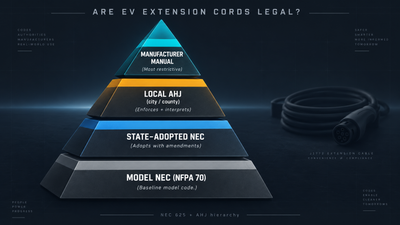
NEC 625.17(C) limits the overall usable EVSE cord/cable length to 25 ft unless a cable-management system is part of the listed EVSE. For portable EVSE, that measurement runs from the attachment plug to the vehicle connector. For fastened-in-place equipment, the output-cable measurement runs from the EVSE to the vehicle connector. States and municipalities adopt different NEC editions and may amend these requirements — the City of Elk Grove residential EV charging station checklist is one example that expressly enforces the 25 ft limit. Confirm the rules enforced by your local authority having jurisdiction before adding an extension.
If you're a renter or apartment dweller — the honest options
Renters have four honest options for EV charging that don't require an extension cord and don't require you to override your EVSE manufacturer's instructions. In priority order:
- Ask your landlord or HOA about a proper receptacle install. A licensed electrician can add a dedicated 120V outlet near your parking spot in most cases. Some states have "right-to-charge" statutes that reduce landlord objections; check your state's current law.
- Use a workplace or public charger. ChargePoint, EVgo, and Electrify America stations are increasingly widespread. Combined with weekend charging trips, many low-mileage commuters get by without home charging at all.
- Consider a portable Level 2 charger that plugs directly into a properly rated, dedicated 240V receptacle that a licensed electrician has verified is suitable for your intended EVSE load (with landlord permission). No extension cord involved.
- If you must use any charging cord — including the vehicle's included 120V cordset — follow the EVSE manufacturer's instructions exactly, including any restrictions on extension cords. Do not improvise workarounds.
Per the DOE Alternative Fuels Data Center, Level 1 at 120V adds roughly 2–5 miles of range per hour. Commuters driving under 40 miles per day can typically charge fully overnight on Level 1 alone if the outlet is available for 8–12 hours.
Warning signs — stop charging and inspect
Charging connectors normally warm up under continuous load; that alone isn't a problem. But any of the following signs means stop, disconnect at the breaker, and have a licensed electrician inspect the receptacle before resuming:
- Any connector or plug body feels unusually hot — hotter than you've noticed on prior charge sessions with the same equipment
- Any receptacle face is discolored, blackened, or shows visible melt marks around the plug slots
- Faint plastic-burning or acrid smell anywhere in the charging path — cord, plug, receptacle, or EVSE brick
- The plug fits loosely in the receptacle or wobbles when you touch it
- The EVSE display or app shows repeated fault codes, derating events, or trip resets
- The circuit breaker for the outlet trips repeatedly — the panel is telling you something in the circuit is not right
Continuing to charge after any of these signs is how small issues become fires.
Some portable EVSEs include a handle-side thermal cutoff — a temperature sensor inside the connector that interrupts the charging session when the handle temperature reaches 85°C (185°F) and resumes automatically once it drops below 70°C (158°F). WenStorm's Level 2 Portable is one example. This is a device-side protection at the vehicle end of the cable, not a wall-receptacle overheat sensor — a hot receptacle at the wall is only caught if heat propagates back through the plug and cable to the handle. It does not substitute for a sound receptacle, correctly sized conductors, or compliance with NEC 625.17(C) when extending.
Frequently asked questions
Is it safe to use an extension cord for a Level 1 (120V) trickle charger?
The correct answer depends entirely on what your specific Level 1 cordset's manufacturer instructs. Follow your vehicle owner's manual and the cordset's included instructions. Do not rely on secondary sources — including this article — for a specific product's official position.
Why does Tesla explicitly restrict extension cords with the Mobile Connector?
Tesla's Gen 2 Mobile Connector owner's manual documents temperature monitoring at multiple locations inside the Mobile Connector, including at the wall-plug interface, and prohibits using an extension cord to plug in the Mobile Connector. When an extension is inserted, the Tesla plug connects to the extension's receptacle rather than directly to the building receptacle. This relocates the monitored wall-plug interface and introduces another plug-and-receptacle junction where resistance and heat can develop. Using equipment contrary to Tesla's instructions may affect warranty coverage for resulting damage; actual outcomes depend on the cause and the applicable policy or warranty terms. This is Tesla's documented position for the Mobile Connector specifically — it's not a universal claim about every EVSE brand. See the Tesla Gen 2 Mobile Connector manual.
What gauge extension cord do I need for a Level 2 EV charger?
Wire gauge alone does not make a wall-side extension acceptable — your EVSE manufacturer's instructions are the authoritative source. If the question is about a car-side J1772 or NACS extension (a different product category), the correct answer is a purpose-built EV cable with a documented current rating that meets or exceeds your EVSE's maximum output, plus verification that the total configuration is permitted by your EVSE manual and local code.
Does a 10 AWG Cord Make Level 1 Extension Charging Safe?
No—not by itself. A thicker conductor can reduce voltage drop and conductor heating, but it does not remove the additional plug connection, weather exposure, receptacle-condition risk or manufacturer restrictions. If the EVSE manual prohibits extension cords, upgrading to 10 AWG does not override that prohibition.
Will using an extension cord void my EV or EVSE warranty?
Warranty coverage depends on the specific policy language and on the cause of any damage claim. If damage traces back to an extension cord used against manufacturer instructions, the manufacturer may deny coverage for that specific damage. Read your EV and EVSE warranty terms carefully and retain purchase receipts.
What about NEMA 14-50 extension cords marketed for RV use?
An RV extension cord's current rating alone does not establish whether it's permitted with any particular EVSE. Regardless of the cord's marketing, your EVSE manufacturer's instructions are the authoritative source — if the manual restricts supply-side extensions, that restriction applies whether the cord is sold for RV, welding, or general outdoor use. Check your EVSE's owner manual before pairing with any aftermarket cord.
Can I extend my Tesla Wall Connector's cable?
Tesla Wall Connectors are hardwired installations designed for a specific cable length. Tesla does not publish approval for adding a third-party NACS extension to the Wall Connector's output cable. If you need more reach, the manufacturer-supported solution is a new Wall Connector installed closer to your parking spot. Do not add an aftermarket extension to a Tesla Wall Connector unless Tesla's documentation expressly permits your exact configuration.
What's the difference between "extension cord" and "extension cable" in EV context?
Content and marketing use both interchangeably, but industry convention is loose. What matters is which side of the EVSE the extension sits on: wall-outlet-to-EVSE (supply side) is often prohibited or restricted by the EVSE manufacturer; EVSE-to-car (vehicle side) with a purpose-built EV cable may be an option when the complete configuration is permitted by the EVSE and vehicle instructions and applicable local code.
How do I tell a J1772 extension cable from a household extension cord on Amazon?
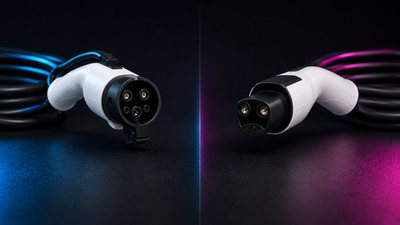
Look at the connector ends. A J1772 extension has a round 5-pin J1772 connector on both ends — physically incompatible with any household receptacle. A household extension cord has a standard NEMA plug (5-15, 6-20, 14-50, etc.) on one end and a matching receptacle on the other. If either end is a NEMA connector, it's a wall-outlet extension and cannot go between your wall and EVSE. If both ends are J1772 (or both NACS), it's a vehicle-side extension and inserts between the EVSE and your car.
Related reading
- EV Extension Cable Buyer's Guide: J1772 vs NACS, Length, and What Not to Do — the full product-decision walkthrough
- Is a 25-Foot EV Charger Cable Long Enough? — how to measure the routed path
- EV Charging Outlet Wear: 7 Warning Signs — receptacle safety for the outlet your EVSE plugs into
- J1772 vs NACS: What's Actually Changing in 2026 — connector-standard transition context
Written by Erik Nyholm, EV Charging Specialist at WenStorm. Erik covers electrical safety, receptacle and connector wear, cold-weather charging behavior, and NEMA / J1772 / NACS spec nuance.
Real questions from EV owners
Join the Outlet & Electrical Safety discussion →