Owning an Electric Car in 2026: Costs, Charging and What to Expect
Costs, home charging setup, insurance, maintenance, battery care, winter range, federal credit changes, and what to check before you sign the paperwork.

By the WenStorm editorial team. Educational content, not electrical, tax, insurance, or vehicle-service advice. Consult your vehicle owner's manual, a licensed electrician for any home electrical work, and a licensed tax professional for federal, state, or utility incentives applicable to your specific situation.
Disclosure: WenStorm publishes this article and sells the portable Level 1 and Level 2 EV chargers and Tesla Gen 2 Mobile Connector NEMA adapters referenced in the recommendations section below. Tesla, Ford, GM, Rivian, Hyundai, Kia, and other referenced brands are not affiliated with WenStorm; their trademarks are used descriptively.
Recall / safety check. Before acting on any charging setup described here for your specific vehicle, verify the vehicle's current recall status via the manufacturer's owner portal and via NHTSA's recall lookup at nhtsa.gov/recalls. Stop using any outlet, plug, adapter, or cable that becomes unusually hot, loose, discolored, corroded, or damaged.
The car is the easy part of EV ownership. Most new-owner surprise, regret, or overspend traces to the decisions that follow the sticker: which outlet you plug into, what your insurance quote actually says, what happens to your range in January, and how much of the federal incentive picture has changed in the last twelve months. This guide is a plain-language walkthrough of what EV ownership looks like in 2026 — the costs, the daily charging setup, the maintenance you do keep, the maintenance you no longer keep, and the specific things worth checking before you sign the purchase agreement.
Direct answer: A 2026 EV typically costs less per mile to fuel than a comparable gasoline vehicle and requires less scheduled maintenance, but the federal purchase credits that shaped the 2023–2025 buying picture are no longer available for vehicles acquired after September 30, 2025. Total cost of ownership now leans more on state, local, and utility incentives, on the electricity rate you pay at home, and on choosing a home-charging setup that matches your actual driving pattern rather than the marketing brochure's fastest number.
What this guide covers
- Is an EV practical for your household?
- What EV ownership costs in 2026
- Federal credit changes and remaining incentives
- Home, apartment, and public charging
- Level 1 vs portable Level 2 vs hardwired
- Battery care, degradation, and warranties
- Winter and highway range
- Maintenance, tires, and repairs
- Insurance, registration, and depreciation
- NACS, J1772, and public DC charging
- Ten questions to answer before buying
- WenStorm portable-charging options
- Frequently asked questions
If you have already bought the vehicle, our New EV Owner Checklist: What to Do in Your First 90 Days is the action-oriented companion to this guide.
1. Is an EV practical for your household?
Before comparing models, three household-fit questions decide most of the outcome.
Where will you park most nights? An attached garage, driveway, or dedicated apartment parking spot with access to a suitable, approved outlet turns the vehicle into a low-friction daily driver. Street parking or a shared lot with no outlet access turns every charge into a scheduled errand at a public charger. This single factor changes the ownership experience more than any spec on the vehicle page. Renters and apartment dwellers with restricted outlet access should read our apartment EV charging guide before committing.
How far do you drive most days, and how far on your longest days? Compare your actual daily mileage (measured over a couple of weeks, not estimated) against the number of hours the vehicle will remain parked and connected. At approximately 2–5 miles of range per charging hour on a dedicated 120V circuit — per the US Department of Energy's Alternative Fuels Data Center — a ten-hour overnight Level 1 session may add roughly 20–50 miles depending on the vehicle and conditions. The bigger question is your longest realistic day — the road trip, the weekend to visit family, the summer vacation route — because that dictates whether public DC fast charging on the route is dense enough for you to actually take those trips in an EV.
Do you have one household vehicle or two? A two-vehicle household with one EV and one gasoline (or hybrid) car absorbs the long-trip weakness with the second car and gets the daily savings of the first. A one-vehicle household with an EV needs to be more deliberate about route planning, home-charging speed, and cold-weather backup routes.
None of these disqualify EV ownership. They shape which EV and which home setup will disappear into the background of your life instead of interrupting it.
2. What EV ownership costs in 2026
Total cost of ownership breaks into six line items. The absolute numbers depend on your state, utility, insurance carrier, and driving pattern; the relative shape is consistent.
Home electricity
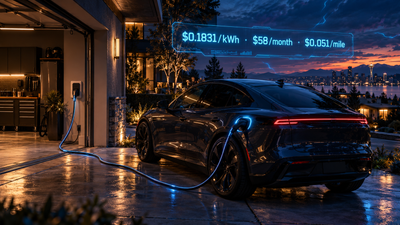
At the US Energy Information Administration's projected 2026 residential average of approximately $0.183 per kWh, an EV averaging 3.5 miles per kWh consumes about 286 kWh to cover 1,000 miles — roughly $52 in electricity at the meter, or about $56–$60 delivered to the battery after normal AC charging losses. This is a national-average illustration; actual cost varies significantly by state, utility, and whether you charge on a time-of-use plan. California, Hawaii, and peak-tier utility markets can run substantially higher. See the current EIA short-term energy outlook for updated figures.
Public charging (DC fast, Level 2 pay stations)
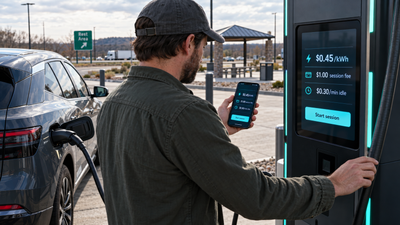
Public DC fast charging in 2026 typically costs several times per-kWh what home electricity costs. A commonly-observed range (as checked mid-2026) is approximately $0.40–$0.60 per kWh, with premium networks higher during peak hours; network pricing, memberships, session fees, and state taxes vary. Owners who home-charge for most of their driving and use public DC only for road trips see a small share of their total charging spend on public sessions. Owners with no home-charging option pay the public rate for the majority of their kWh, which can flatten most of the EV-versus-gasoline fuel savings on paper.
Home charging equipment and install
| Line item | Typical US cost range | Notes |
|---|---|---|
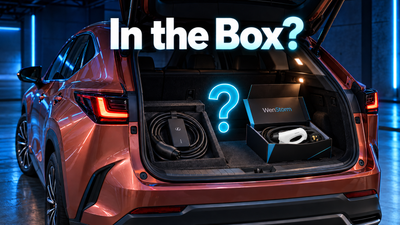
| Portable Level 1 EVSE (if not included with the vehicle) | $150–$300 | Delivery equipment varies by manufacturer, model year, and region. Check the exact delivery bundle before assuming one is included. |
| Portable Level 2 EVSE (32A) | $200–$500 | Third-party portables commonly $200–$300; manufacturer-branded options often $300–$500. |
| Hardwired Level 2 EVSE (48A, unit only) | $400–$700 | Tesla Universal Wall Connector listed at $600 on tesla.com when checked 2026-07-30. |
| NEMA 14-50 outlet install (electrician) | Several hundred to several thousand dollars | Long wiring runs, trenching, permits, panel distance, panel capacity, and local labor rates can all move the total significantly. |
| 60A dedicated circuit + hardwired install | Several hundred to several thousand dollars | Load-management equipment, panel work, or a service upgrade can increase the total substantially. A load calculation or a load-management EVSE may avoid an upgrade — an electrician determines this. |
Insurance
Auto insurance premiums for a comparable EV often run higher than for a comparable gasoline vehicle, though the delta varies significantly by carrier, state, and specific model. Contributing factors include higher parts costs, longer repair times, and the need for shops with EV-certified technicians. Get a written quote from your carrier for the specific model before delivery — not after.
Maintenance
EVs eliminate several routine gasoline-vehicle services (oil changes, transmission service, spark plugs, fuel filters, emissions repairs) but still require tire rotations, cabin air filters, brake fluid, coolant service for the battery thermal system on some vehicles, and eventual pad and rotor service (regenerative braking extends but does not eliminate friction-brake wear). See section 8 for the full maintenance picture.
Registration, fees, and depreciation
Some US states charge an annual EV registration surcharge (often $100–$225 per year) to offset lost gasoline tax revenue. Depreciation on new EVs has been volatile through 2024–2025; used-EV values depend heavily on remaining battery warranty, battery health, and model reputation. Section 9 walks through what to check.
3. Federal credit changes and remaining incentives
The federal new-, used-, and commercial-clean-vehicle purchase credits are unavailable for vehicles acquired after September 30, 2025. Buyers who entered a qualifying binding contract and made a payment on or before that date may fall under transitional rules. Full current guidance is on the IRS clean-vehicle-credits page at irs.gov/clean-vehicle-tax-credits.
What that means for a 2026 buyer:
- Do not build the "up to $7,500 federal credit" into your 2026 purchase math unless your specific circumstances qualify under the transitional rules described in current IRS guidance.
- State-level incentives still exist in many states (rebates, tax credits, HOV-lane access, reduced registration fees). Check your state's energy office or DMV page for current programs.
- Utility incentives — rebates on home Level 2 chargers, time-of-use discounts for overnight EV charging, panel-upgrade rebates — remain widely available and are worth researching before buying either the vehicle or the home charging equipment.
- Local incentives (municipal rebates, HOA-approved charging infrastructure grants, workplace charging benefits) vary considerably. A licensed tax professional or your state energy office is the authoritative source for what applies to you.
4. Home, apartment, and public charging
EV charging in 2026 breaks into three lifestyle patterns, and the right home setup depends on which describes yours.
Home charging (owner-occupied, dedicated parking)
Roughly 80% of US EV charging happens at home overnight. Home owners with dedicated parking have the widest option set and the lowest per-mile fuel cost. The typical setup is a 32A portable Level 2 EVSE on a NEMA 14-50 outlet on a dedicated 50A branch circuit, delivering approximately 7.7 kW when the vehicle accepts it — enough to replenish a typical day's driving within an overnight window. Whether to hardwire, or whether to stick with portable, comes down to your specific vehicle and driving pattern; see section 5.
Apartment and renter charging
Renters and apartment residents face the widest gap between vehicle capability and outlet availability. Charging often means a Level 1 portable EVSE on a shared or assigned 120V outlet, or a portable Level 2 on a shared 240V outlet where one exists and the landlord or HOA has approved its use. Even portable-EVSE setups may require landlord or HOA approval for common-area electricity use, parking-area cable routing, or access to a shared outlet — do not assume portable use is always approval-free. The full playbook (including how to build an HOA proposal that actually gets approved) is in our apartment EV charging guide. Related reading: tenant wants an EV plug — who pays, sharing an EV charger with a neighbor, and charging two EVs on one outlet.
Public charging
Public charging comes in two forms. Level 2 pay stations at grocery stores, workplaces, and municipal lots deliver 25–40 miles per hour — useful for topping off during a stop of several hours. DC fast chargers on interstate corridors deliver 100–200+ miles in 20–40 minutes and are the enabling infrastructure for long trips. Route-planning apps (PlugShare, A Better Route Planner, and vehicle-native trip planners) map available stations and current pricing. See our EV road trip charging guide for the corridor-planning walkthrough.
5. Level 1 vs portable Level 2 vs hardwired
Three home-charging tiers exist. The right one depends on how much your daily driving depletes the pack, not on which sounds fastest on the spec sheet.
Level 1 (120V)
A dedicated 120V outlet with a Level 1 portable EVSE delivers approximately 1.4 kW at 12A (on a 15A branch circuit) or approximately 1.9 kW at 16A (on a 20A branch circuit). The US Department of Energy's Alternative Fuels Data Center characterizes Level 1 at roughly 2–5 miles per hour of charging depending on vehicle efficiency. For a household whose daily driving is well within the miles that can be recovered during the vehicle's connected overnight window, Level 1 may be sufficient indefinitely. Confirm any Level 1 circuit's suitability with a licensed electrician before nightly use.
Portable Level 2 (240V, up to 32A on a NEMA 14-50)
A portable Level 2 EVSE plugged into a correctly wired and inspected NEMA 14-50 outlet on a dedicated 50A branch circuit delivers up to 32A of continuous EV charging under NEC 210.19(A)(1) and 210.20(A). Delivered power is approximately 7.7 kW when the vehicle accepts 32A. The portable form factor moves with the household — apartment to house, one home to another, or with the driver on multi-stop trips. This tier fits the majority of US EV households and does not require a hardwired install if a code-compliant NEMA 14-50 already exists.
Hardwired Level 2 (240V, up to 48A on a dedicated 60A circuit)
A hardwired Level 2 EVSE on a dedicated 60A branch circuit can deliver up to 48A continuous — approximately 11.5 kW when the vehicle accepts 48A. Real-world benefit depends on whether your vehicle's onboard charger accepts 48A. Vehicle AC-charging limits vary by model year and configuration; check the owner's manual or the vehicle's charging screen before deciding whether the incremental spend on a hardwired 48A install returns any additional delivered rate. For a vehicle that caps at 32A on the AC side, a 48A install does not deliver a higher rate — the vehicle throttles the current down.
Which tier fits
The right tier for your household is less about which is fastest and more about whether your daily pattern can be replenished during the hours the vehicle is actually parked and connected. A driver covering 30 miles a day on a vehicle parked from 6 pm to 7 am has different requirements than a rideshare driver covering 200 miles a day with a mid-afternoon charging window. For deeper tier-comparison, see why EV charging is slower than the label.
6. Battery care, degradation, and warranties
The high-voltage traction battery is the single most valuable component in the vehicle. Many EV manufacturers provide an 8-year / 100,000-mile high-voltage battery warranty, but the term, mileage limit, capacity-retention guarantee, and transferability vary. Vehicles sold in California and other CARB states are subject to longer state-level warranty rules. Read the specific vehicle's warranty booklet, not the marketing page.
Habits that support battery health over the ownership horizon:
- Follow the daily charge-limit recommendation displayed by the vehicle or provided in its owner's manual. Many nickel-based batteries are assigned a lower daily limit; some LFP-equipped vehicles are instructed to charge to 100% regularly. Guidance varies by manufacturer and battery configuration.
- Prefer AC (Level 1 / Level 2) charging over DC fast charging when both are available. DC fast charging is not harmful in ordinary use, but a home-charging-first routine is easier on the pack over years of ownership.
- Avoid extended parking at very low or very high state of charge. Storage guidance varies by manufacturer — check the owner's manual for the recommended long-term parking range.
- Precondition the battery before DC fast charging in cold weather. Most modern EVs do this automatically when you route to a DC fast charger through the vehicle's built-in navigation.
Battery capacity normally declines gradually with age and use, but there is no universal five- or eight-year percentage. Chemistry, ambient temperature, mileage, charging habits, and time spent at very high or very low charge levels all influence degradation. For model-specific expectations, prefer manufacturer warranty data, third-party diagnostic reports, and credible model-specific fleet studies over owner-forum anecdotes.
7. Winter and highway range
EV range on the sticker is a controlled-condition estimate. Real-world range varies by three factors more than any other.
Cold weather. Cold weather can materially reduce range because cabin heating and battery conditioning consume energy that a gasoline vehicle draws from waste engine heat for free. A heat-pump-equipped EV generally handles cold better than a resistive-heater EV, though the delta varies by design. Preconditioning the cabin and battery while the vehicle is still plugged in can reduce the amount of stored battery energy used at departure, but it does not eliminate the effect of cold weather on driving range.
Highway speed. Higher highway speeds increase aerodynamic drag and reduce efficiency. Sustained 70–80 mph driving consumes disproportionately more energy than city and moderate-speed driving because drag rises with the square of velocity.
Payload and towing. Fully loaded cargo areas or roof racks reduce range; towing further reduces range, sometimes substantially, depending on trailer size and shape. Use model-specific tests and manufacturer towing guidance when planning a long trip.
For cold-climate driving, see the cold-weather charging forum category for real-owner reports from Toronto, Minneapolis, Alberta, and the Nordics.
8. Maintenance, tires, and repairs
EVs eliminate several routine gasoline-vehicle services. They also introduce or preserve service items that some owners do not expect.
No longer needed: engine-oil and filter changes, spark plugs, fuel filters, air-intake filters, exhaust-system maintenance, and emissions-related repairs.
Still often needed (varies by model): tire rotations, tire replacement, cabin air filter, brake fluid, wiper blades, 12V accessory battery replacement, eventual pad and rotor service (regenerative braking extends but does not eliminate friction-brake wear), battery coolant service at long-interval milestones, and model-specific reduction-gear or drive-unit fluid inspection or service. Check the specific vehicle's owner-manual maintenance schedule — assumptions carried over from another EV brand can miss the intervals your vehicle actually calls for.
Tires. EVs weigh more than comparable gasoline vehicles because of the battery pack, and instant torque increases tire wear if the driver accelerates aggressively. Tire wear varies by vehicle weight, alignment, tire design, and driving style. Follow the manufacturer's load, size, and speed ratings for replacements; an "EV-specific" marketing label is not itself the compatibility requirement — the underlying load and speed rating is what matters.
Repair availability. Independent EV repair shops are more common in 2026 than in previous years, but service networks for less common EV brands are still thinner than for mainstream gasoline vehicles. Before buying a specific model, check that at least one certified repair option exists within a reasonable drive of your home.
9. Insurance, registration, and depreciation
Insurance: Get a written quote from your carrier for the specific make, model, trim, and VIN before delivery. Premiums vary meaningfully across carriers because underwriting for EVs is uneven — some carriers price them well, some do not. Comparison shopping across at least three carriers is worth the hour it takes.
Registration: A number of US states charge an annual EV registration surcharge, commonly in the $100–$225 range, to offset lost gasoline-tax revenue. Your DMV page shows the current figure for your state.
Depreciation: New-EV depreciation has been volatile through 2024–2025. Values depend heavily on remaining battery warranty, model reputation, and demand for that specific configuration. Check independent value guides (KBB, Edmunds, Manheim wholesale data) for real depreciation curves before assuming a specific residual value for lease or financing math.
For used-EV buyers: The critical checks are (1) remaining battery warranty term (transferable? mileage remaining?), (2) documented battery state-of-health from a third-party diagnostic scan or the manufacturer's own service report, (3) any pending recalls (verify VIN at nhtsa.gov/recalls), (4) charging history if available (heavy DC-fast-charging-only history matters more on some models than others), and (5) evidence of manufacturer-recommended tire, brake, and coolant service.
10. NACS, J1772, and public DC charging
Two AC charging connector standards matter in North America in 2026.
J1772 (SAE J1772) is the AC connector standard used historically by most non-Tesla EVs sold in North America.
NACS (SAE J3400, standardized December 2023) is the Tesla-designed connector that most major automakers have committed to adopt for new vehicles. Adoption is staggered by manufacturer and model year; some 2026 vehicles ship with NACS inlets natively, some still ship with J1772 inlets, and manufacturers typically provide an adapter for cross-standard AC charging.
Practical implications:
- A NACS-inlet vehicle charges directly on a NACS EVSE and on a J1772 EVSE via a manufacturer-approved J1772-to-NACS adapter.
- A J1772-inlet vehicle charges directly on a J1772 EVSE and on a NACS EVSE via a manufacturer-approved NACS-to-J1772 adapter.
- When buying a home EVSE, match the connector variant to your vehicle, or plan for the specific adapter you'll need.
- For DC fast charging, Tesla Supercharger access is opening to non-Tesla NACS-inlet vehicles on a manufacturer-by-manufacturer schedule. Verify the specific vehicle's current Supercharger-eligibility on the manufacturer's support pages before assuming access.
For deeper detail, see our NACS vs J1772 in a multi-EV household guide and our EV adapters guide.
11. Ten questions to answer before buying
Answering these questions before the test drive prevents most first-year regret.
- Where will the vehicle park most nights, and what outlet is within reach of that parking spot? If no outlet exists within reasonable cable reach, the ownership picture is dramatically different.
- What is the branch circuit type and condition at that outlet? An unknown-age NEMA 14-50 that has been powering a range for 30 years is not automatically safe for continuous EV charging. A licensed electrician should evaluate.
- Is the branch circuit wired in copper or aluminum? Aluminum-conductor branch circuits (common in US homes built 1965–1975) require specific torque-checked terminations for continuous EV loads.
- What is your electrical panel's spare capacity? Whether a 40A or 60A EV circuit can be added straightforwardly, or requires a load calculation, load-management EVSE, or a full service upgrade, depends on the panel — an electrician determines this.
- Are you an owner or a renter? Renters need landlord or HOA approval for anything beyond an existing-outlet portable EVSE, and sometimes for that too.
- What is your realistic daily and weekly driving pattern? Not what you think it might be after buying the EV — what it actually is now, measured over two weeks.
- What is your longest realistic single-day trip in the next 12 months? Route this trip in a public-charging app before the purchase. If the corridor coverage is thin, adjust expectations or plan for a rental for that trip.
- Have you gotten a written insurance quote for the specific model? Not the manufacturer's estimate — a written quote from your carrier.
- What is the vehicle's battery warranty (term, mileage, state-of-health guarantee, transferability)? Read the warranty booklet, not the marketing page.
- What incentives actually apply to you in 2026? Federal purchase credits ended for vehicles acquired after Sept 30, 2025. State, utility, and local incentives still exist and vary. Confirm with a tax professional or your state energy office; do not rely on dealership brochures.
12. WenStorm portable-charging options
WenStorm's product line focuses on portable EVSEs and adapters that move with the driver — the household setup for the majority of US EV owners, and specifically the households that rent, move, travel, or prefer not to hardwire.
Portable Level 2 (32A) — Level 2 Portable EV Charger, $219.99. Delivers up to 32A / ~7.7 kW at 240V on a correctly wired NEMA 14-50 outlet with the proper branch circuit and receptacle. Available in a J1772 variant for J1772-inlet vehicles and a separate NACS variant for NACS-inlet vehicles. The two connector variants are separate products; a mixed-connector household needs either both variants or an NACS EVSE paired with a NACS-to-J1772 adapter (see the Universal Airbnb Host Kit below).
Portable Level 1 — Level 1 Portable EV Charger, $169.99. Designed for overnight charging from a compatible 120V circuit. On a standard 15A NEMA 5-15 circuit, continuous EV charging must be limited to 12A per NEC 210.19/210.20. Any higher-amperage setting requires a suitable 20A circuit (NEMA 5-20 or equivalent) and the connection specified in the product manual. Suitable for households whose daily driving is well within Level 1's overnight recovery window on a code-compliant existing 120V outlet.
Household-specific kits. The J1772 Home Kit, Tesla/NACS Home Kit, J1772 Apartment Kit, Tesla/NACS Apartment Kit, J1772 Renter Kit, Tesla/NACS Renter Kit, and the two Road Trip Kits pair a charger with the extension cables or accessories most useful for that household pattern. See the Solution Finder to match a kit to your specific outlet and vehicle.
Universal Airbnb Host Kit ($242.98). The NACS 32A charger plus a NACS-to-J1772 adapter — the one WenStorm product designed to serve both a Tesla and a non-Tesla vehicle with a single EVSE. Useful for mixed-connector households and hosts.
Tesla Gen 2 Mobile Connector NEMA adapters. WenStorm sells NEMA 14-50, 14-30, 10-30, 6-50, 5-15, and TT-30 adapters designed exclusively for the Tesla Gen 2 Mobile Connector. These adapters are not universal EVSE input adapters — they must not be used with a WenStorm portable EV charger or another EVSE unless that equipment's manufacturer explicitly identifies the specific adapter as compatible. Adapters are individual accessories for Tesla owners whose vehicle already ships with the Gen 2 Mobile Connector.
What WenStorm does not sell: a hardwired 48A wall unit. For an owner whose vehicle has been verified (by owner-manual or on-screen amperage) to accept 48A AC charging and who wants that maximum home-charging rate from a wall-mounted hardwired EVSE, the Tesla Universal Wall Connector ($600 on tesla.com when checked 2026-07-30) and equivalent third-party hardwired units are the honest recommendation. WenStorm's portable Level 2 is a movable, plug-in alternative — not a competitor to a hardwired 48A unit.
13. Frequently asked questions
Is the $7,500 federal EV tax credit still available in 2026?
For most 2026 buyers, no. The federal new-, used-, and commercial-clean-vehicle purchase credits are unavailable for vehicles acquired after September 30, 2025. Buyers who entered a qualifying binding contract and made a payment on or before that date may fall under transitional rules. See current IRS guidance at irs.gov/clean-vehicle-tax-credits. State, local, and utility incentives still exist and vary — confirm what applies to you with a tax professional or your state energy office.
Do I need to install a hardwired Level 2 charger to own an EV?
Not for most households. A portable Level 1 EVSE on a dedicated 120V outlet is sufficient when the vehicle remains connected long enough each night to replenish that day's driving. A portable Level 2 EVSE on a correctly wired NEMA 14-50 covers the majority of US driving patterns at up to 32A continuous. Hardwired 48A installs are meaningful primarily for vehicles whose onboard charger actually accepts 48A and for driving patterns where the added rate matters.
Can I use my dryer outlet to charge my EV?
Sometimes, with caveats. A NEMA 14-30 (four-prong dryer outlet) supports up to 24A continuous EV charging with a manufacturer-approved 14-30 adapter and a compatible EVSE. A NEMA 10-30 (older three-prong dryer outlet) has no separate equipment ground and is compatible with some EVSEs and not others — check the EVSE manual. In either case, do not run the dryer and the EV simultaneously on the same outlet. See our can my EV charge from a dryer outlet guide.
How much does home EV charging actually cost per month?
At EIA's projected 2026 US residential average of approximately $0.183/kWh, driving 1,000 miles per month at 3.5 miles/kWh consumes about 286 kWh — roughly $52 at the meter, or about $56–$60 delivered to the battery after normal AC charging losses. Actual cost depends on vehicle efficiency, charging losses, utility rate, and time-of-use pricing. State-level rates vary widely; California, Hawaii, and peak-tier markets can run substantially higher.
What is the difference between J1772 and NACS, and does it affect which charger I need?
J1772 is the AC charging connector standard used historically by most non-Tesla EVs. NACS (SAE J3400, standardized December 2023) is the Tesla-designed connector being adopted by most automakers on new vehicles. A NACS-inlet vehicle charges directly on NACS EVSEs and on J1772 EVSEs via a J1772-to-NACS adapter. A J1772-inlet vehicle charges directly on J1772 EVSEs and on NACS EVSEs via a NACS-to-J1772 adapter. When buying an EVSE, match the connector variant to your vehicle, or plan for the specific adapter.
Should I worry about my EV catching fire while charging at home?
The base rate of home EV fires is low. Damaged, loose, or improperly installed receptacles are a recognized charging hazard: stop using any outlet, plug, adapter, or cable that becomes unusually hot, loose, discolored, corroded, or damaged, and have a qualified electrician evaluate the branch circuit before returning to nightly use. Verify your specific vehicle and charging equipment for active recalls at nhtsa.gov/recalls.
What if I move? Do I lose my hardwired charger?
A hardwired Level 2 EVSE is permanently mounted and typically stays with the property, but it can be professionally removed, included in the sale, or addressed in the sale agreement. Some sellers negotiate removal as a condition of sale; some leave it as a value-add. A portable Level 2 EVSE moves with the household by design — the cable goes with you.
How long will the battery last, and what is the warranty?
Many EV manufacturers provide an 8-year / 100,000-mile high-voltage battery warranty, but the term, mileage limit, capacity-retention guarantee, and transferability vary by manufacturer. Vehicles sold in California and other CARB states are subject to longer state-level requirements. Battery capacity normally declines gradually with age and use, but there is no universal five- or eight-year percentage figure — chemistry, ambient temperature, mileage, charging habits, and time spent at very high or very low charge levels all influence degradation. Read the specific vehicle's warranty booklet, and prefer manufacturer warranty data, third-party diagnostic reports, and credible model-specific fleet studies over owner-forum anecdotes when estimating what to expect from a given model.
For deeper coverage on specific scenarios, see our apartment EV charging guide, EV adapters guide, road trip charging guide, and EV charger troubleshooting guide.