Do You Need a Second EV Charger? When a Portable Backup Is Worth It
The right question isn't do I need a second charger? — it's whether a portable backup gives you a charging path your primary setup doesn't already provide.

TL;DR
No — not by default. A portable backup is worth considering only when it gives you a charging path your primary setup doesn't provide: a spare 240V outlet if a wall charger fails, a compatible destination outlet, or a second EV on a separate circuit. A portable EVSE does not provide electricity — it cannot solve a power outage, a dead roadside battery, or a destination without a compatible outlet. Prioritize outlet compatibility, vehicle connector, safety certification, cable reach, and portability before amperage.
What Does "Backup EV Charger" Actually Mean?
Before deciding whether to buy a backup, sort out what you're actually backing up. Different backup needs require different equipment.
240V Level 2 charging where a NEMA 14-50 is available. This is the WenStorm 32A portable's job (or a similar 240V NEMA 14-50 EVSE). It plugs into a NEMA 14-50 receptacle only — the same outlet used for electric ranges and RV hookups. It does not work with a standard 120V household outlet, a dryer outlet, a TT-30 RV outlet, or an ordinary 120V generator.
120V Level 1 charging from ordinary household outlets. This requires a separately listed Level 1 cordset appropriate for the outlet, circuit, and vehicle. DOE estimates Level 1 at roughly 2–5 miles of added range per hour, treating EV charging as a continuous load under the National Electrical Code — circuit selection matters even at 120V.
Tesla-specific charging from RV / campground TT-30 outlets. A Tesla Gen 2 Mobile Connector plus the WenStorm TT-30 adapter handles this specific case. The TT-30 adapter works only with a compatible Tesla Gen 2 Mobile Connector; it does not convert the WenStorm 32A NEMA 14-50 charger for TT-30 use.
Dryer-outlet charging (NEMA 14-30 or 10-30). This requires an EVSE with a manufacturer-approved adapter and automatic current limiting to 24A. The WenStorm 32A NEMA 14-50 charger does not include NEMA 14-30 or 10-30 adapters and should not be adapted mechanically.
When Does a Portable Backup Actually Help?
The most important question isn't whether a backup exists — it's whether the backup gives you a charging path you can actually use in the specific situation you're preparing for.
| Situation | Portable backup useful? | Why |
|---|---|---|
| Wall charger fails + suitable NEMA 14-50 available | Yes | Gives you an alternate home charging path |
| Wall charger fails + no usable 240V outlet | No, by itself | A portable EVSE still needs a compatible power source |
| Wall charger is hardwired with no plug-in circuit nearby | Usually no | Portable needs a matching plug-in outlet; adding one is an electrician job |
| Road-trip destination has an authorized compatible outlet | Yes | Enables overnight destination charging |
| EV battery dies on the roadside | No | An EVSE is not a battery pack |
| Home power outage | No | An EVSE does not generate electricity |
| Second EV + separate suitable circuit | Yes | Can provide a second charging path |
| Two EVs + only one ordinary circuit | Not simultaneously by default | Requires suitable load management or alternating charging |
| No reliable compatible outlets where you travel | Probably not | Public charging may be more useful |
7 Situations Where a Backup Is Genuinely Useful
Each of these assumes the backup is a Level 2 portable used at a compatible NEMA 14-50 receptacle on an adequate dedicated circuit, or a Level 1 cordset at a suitable 120V outlet.
1. Your Primary Charger Fails
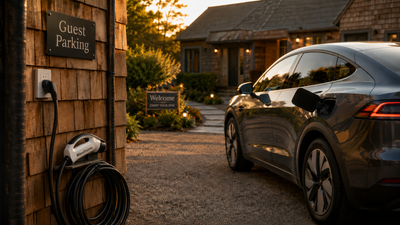
Wallboxes fail — contactor wear, communication modules, weather exposure, firmware issues. Warranty covers the repair, but the RMA cycle takes time. A backup Level 2 portable keeps home charging running only if a separate compatible NEMA 14-50 receptacle and adequate circuit are already available. Many wallboxes are hardwired directly to a branch circuit with no receptacle — in that case, the backup portable doesn't help unless the electrician who installed the wallbox left a matching plug-in circuit available.
2. You Travel to a Property with a Compatible Outlet
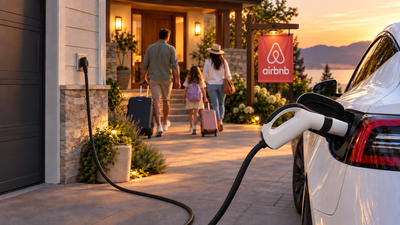
Airbnbs with a NEMA 14-50 in the garage, second homes with an RV hookup, friends' houses with a welding-shop 14-50. A portable in the trunk turns those specific outlets into Level 2 charging overnight. Verify with the host that the receptacle is on an adequate dedicated circuit before charging. See our Airbnb host playbook and road-trip backup kit for outlet-scouting frameworks.
3. Two EVs on One Wallbox
You have one EV today and add a second later. Two vehicles compete for the same wallbox on the same overnight window. A wallbox ecosystem with dynamic load balancing solves this cleanly if you plan for it. A second portable helps only when a separate suitable circuit and sufficient electrical capacity already exist. Two 32A EVSEs charging simultaneously can exceed the service capacity of many residential panels; a licensed electrician should assess whether your home supports it before adding a second charger.
4. You Move, Sell, or Rent Somewhere Else Temporarily
Hardwired wallboxes stay with the property. If you sell, move, or spend extended time at a second residence, the portable goes with you and works at any property with a compatible NEMA 14-50 outlet on an adequate circuit. This is the same argument that makes portable the primary choice for renters (see our apartment EV charging guide).
5. You Want Level 2 Speed at a Second Property
Vacation homes, family properties, work-from-home destinations. If the second property has a NEMA 14-50 (or you can have one installed after confirming panel capacity), a portable in the trunk is the shared charger between your primary and secondary residences.
6. You Add a Second EV with a Separate Circuit
Adding a second EV to a two-car household is where a second charger genuinely pays off — provided a separate suitable circuit already exists or can be added by a licensed electrician. If both EVs must share one circuit, a single wallbox with dynamic load balancing is usually a cleaner solution than two portables running simultaneously.
7. You Occasionally Loan or Share the Charger
Family members borrow your EV. Neighbors want to try charging at home before installing their own wallbox. A backup portable is easier to loan than uninstalling a wall unit. Any borrower must have a compatible outlet, an appropriate circuit, and a matching vehicle connector (J1772 or NACS) for the loan to be useful.
Who Probably Doesn't Need a Second EV Charger
- Your daily driving is entirely within your primary wallbox's overnight window and you rarely travel to properties with compatible outlets.
- Your primary charger is a Tesla Mobile Connector or similar OEM cordset that already provides broad outlet flexibility with multiple adapters, and you don't need faster 14-50 charging on top of it.
- You don't have reliable access to compatible 240V outlets away from home, and public Level 2 or DC fast charging is more accessible where you travel.
- Your wallbox is hardwired with no plug-in outlet nearby, and adding one just to enable a backup would cost more than replacing the wallbox itself.
Which Backup Fits Which Need?
Backup needs vary. Match the equipment to the need — not the marketing.
| Your backup need | Appropriate equipment |
|---|---|
| Faster charging where a NEMA 14-50 is available | 240V Level 2 portable such as the WenStorm 32A NEMA 14-50 charger |
| Broad access to ordinary 120V outlets | A separately listed Level 1 cordset appropriate for the outlet, circuit, and vehicle |
| Tesla charging from RV or campground TT-30 outlets | Tesla Gen 2 Mobile Connector + WenStorm TT-30 adapter |
| Charging from a dryer outlet (14-30 or 10-30) | An EVSE with a manufacturer-approved adapter and automatic current limiting to 24A — not the fixed WenStorm 14-50 charger |
| Multi-outlet flexibility for unpredictable destinations | Tesla Mobile Connector bundle (multiple NEMA adapters) or equivalent multi-adapter EVSE |
What Matters Most in a Backup Portable EV Charger?
Shopping priorities for a backup differ from a primary charger. Compare in this order:
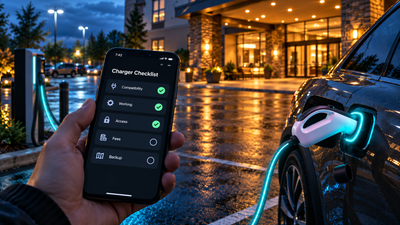
- Outlet compatibility. A backup only works when its input matches the power sources you'll actually encounter. Fixed 14-50 plug simplicity vs multi-outlet flexibility is a real trade-off — think through the destinations you'll use it at before you buy.
- Vehicle connector. Match J1772 or NACS to your car. If your household has one of each, look for an EVSE that ships in both variants (or use a listed adapter cable rated for continuous use).
- Safety certification. Verify the complete EVSE's listing and model-specific documentation from a nationally recognized testing laboratory (UL, Intertek/ETL) to applicable standards including UL 2594 and UL 2231. Certification is non-negotiable for a device that stays plugged in for hours.
- Cable reach. Backup charging often means outlets 20+ feet from where you park. Longer cable (25 ft is common on the higher end) is more useful than shorter cable at destinations you don't control.
- Portability. Compare packed size, weight, and how easily the charger stores in your vehicle. A charger that lives in the trunk should be reasonably easy to coil, store, and carry.
- Amperage — compare last. A 40A EVSE that only works with an outlet you rarely encounter may be less useful than a lower-power setup that matches your actual destinations. Also check your vehicle's onboard AC charging limit; a higher-rated EVSE cannot force the vehicle to accept more AC power than its onboard charger supports.
2026 Portable EV Charger Comparison
Priorities for a backup: outlet flexibility first, then connector, cable reach, portability, certification. Amperage is a tiebreaker.
| Product | 120V support | 240V options | Max output | Cable length | Connector | Swappable outlet adapters? | Carrying case | Certification | Warranty |
|---|---|---|---|---|---|---|---|---|---|
| WenStorm 32A Portable | No (fixed 14-50 plug) | NEMA 14-50 only | 32A · 7.7 kW | 25 ft | J1772 or NACS | No (fixed plug) | Not included | Designed to UL 2594; verify listing on product page before purchase | 2 years |
| Tesla Gen 3 Mobile Connector | Yes (NEMA 5-15 in bundle) | NEMA 14-50 in bundle; optional 5-20, 6-15, 6-20, 10-30, 14-30, 6-50 | Up to 32A · 7.7 kW (with 14-50 adapter) | ~20 ft | NACS | Yes (multiple) | Included | Per Tesla product page | Per Tesla policy |
| Lectron 40A J1772 Portable | No (dedicated 240V) | NEMA 14-50 (fixed plug) | 40A · 9.6 kW | ~20 ft | J1772 | No (fixed plug) | Not standard | Per Lectron listing | Per Lectron policy |
| Lectron NACS Portable | Yes (NEMA 5-15 plug) | NEMA 14-50 (interchangeable plug) | Up to 32A · 7.7 kW (14-50) / 12A · 1.4 kW (5-15) | ~20 ft | NACS | Yes (5-15 / 14-50) | Not standard | Per Lectron listing | Per Lectron policy |
Specs summarized from each product's manufacturer page as of 2026-09-11. Confirm current specs on the manufacturer's site before purchase.
For a Backup Charger, Is 40A Better Than 32A?
Not necessarily. At 240V, 32A is about 7.7 kW and 40A is about 9.6 kW — a ~25% throughput difference on paper. But a backup charger's usefulness depends first on whether you can plug it into the outlets you're likely to encounter. A 40A EVSE that only works with an outlet you rarely have access to may be less useful than a lower-power setup that matches your actual destinations.
Also check your vehicle's onboard AC charging limit. Some EVs are limited to 32A / 7.7 kW or less; others can accept higher AC power. A higher-rated EVSE cannot force the vehicle to accept more AC power than its onboard charger supports — so on 32A-capped vehicles, 40A hardware costs more without adding charging speed.
The Honest Cost Framing
Evaluate a backup charger primarily as a convenience and resilience purchase, not as a guaranteed financial return. It can reduce public-charging costs and reduce disruption when your primary charger is unavailable, but break-even depends on your driving, local charging prices, and how often you actually encounter compatible outlets away from home.
Worked example. A driver covering 250 miles per week at ~0.30 kWh/mile needs about 75 kWh over that week. At an illustrative public DC fast rate of $0.40/kWh (rates vary widely by network, region, and time of day — check your specific network before relying on the math), that's roughly $30 per week. Substitute your actual local rates for a real comparison. That's meaningful, but a single week of public charging doesn't pay off a portable EVSE — break-even depends on how many weeks a year you actually need the backup and what your alternatives cost.
Favors buying: you value not planning trips around public-charger availability; you occasionally travel to properties with compatible NEMA 14-50 already installed; you have or expect a second EV within the primary charger's ownership window; you want resilience against extended wallbox outages.
Argues against: your daily driving is entirely within your primary wallbox's window and you rarely travel; your primary charger already provides broad multi-adapter flexibility; you don't have reliable access to compatible outlets away from home.
WenStorm's Backup Recommendation
If your situation matches one of the "backup useful" rows in the decision table above, and you have a NEMA 14-50 outlet on an adequate dedicated circuit (or can plan destinations around 14-50 access), the 32A NEMA 14-50 portable is the specific WenStorm product designed for that use case.

Frequently Asked Questions
Should I keep a portable EV charger in my trunk?
Only if you regularly travel to destinations with compatible authorized outlets you can plug into, or want a fallback for the specific case of your primary wall charger failing while a plug-in NEMA 14-50 is still available. A trunk-carried EVSE doesn't do anything useful if the destinations you actually visit don't have compatible outlets.
What happens if my home EV charger breaks?
Warranty support usually covers repair or replacement, but the RMA cycle takes days to weeks. A backup Level 2 portable maintains home charging only if a separate NEMA 14-50 receptacle on an adequate circuit is already available at your parking spot. If the wallbox is hardwired with no plug-in outlet nearby, the portable doesn't help without an electrician adding one.
Can a portable EV charger help during a power outage?
No. An EVSE is a controller that manages current between a wall outlet and the vehicle — it doesn't generate electricity. If the utility is out, the portable is out.
Can a portable EV charger charge a dead EV on the roadside?
No. A portable EVSE still needs to be plugged into an external 120V or 240V power source. Roadside recovery for a stranded EV is a tow-truck-and-DC-fast-charger situation, not a portable-EVSE situation.
Do I need both a Level 1 and Level 2 backup charger?
Usually one is enough — pick whichever matches the outlets you'll actually encounter. The current Tesla Mobile Connector bundle already includes both 5-15 and 14-50 adapters, so it covers Level 1 and 32A Level 2 in one device. If your primary is a wall-mounted Level 2 with no cordset, a Level 1 cord is a cheap backup for the specific case where the only outlet you can find is 120V.
Is a 32A portable charger enough as a backup?
For many passenger EVs, yes. An 8-hour session at 32A represents up to about 61 kWh of EVSE output before charging losses — for many drivers, that replaces substantially more energy than a typical day's driving. Large-battery trucks and SUVs may take longer to reach a target state of charge. Check your vehicle's onboard AC charger rating before paying extra for a 40A EVSE — some vehicles are limited to 32A or less; others can accept higher AC power.
Is a Tesla Mobile Connector enough as a backup charger?
For many Tesla owners, yes. Tesla's current Mobile Connector bundle already ships with both 5-15 (Level 1) and 14-50 (Level 2, up to 32A) adapters — the same maximum AC output as most 32A portables. A second portable is mainly useful if you want an independent second EVSE, need a J1772 connector for a non-Tesla EV, or need outlet adapters (like TT-30 or 6-50) that aren't in the Tesla bundle.
Do two EVs need two chargers?
Not always. A single Level 2 wallbox with dynamic load balancing can charge two EVs sequentially or in a shared session, depending on how far each vehicle needs to charge overnight. Two ordinary EVSEs running simultaneously often exceed residential panel capacity — have a licensed electrician confirm your service capacity before adding a second charger on a separate circuit.
Primary Sources and Methodology
- U.S. DOE Alternative Fuels Data Center — Charging Electric Vehicles at Home — Level 1 and continuous-load framing
- U.S. DOE Alternative Fuels Data Center — Electric Vehicles for Consumers — Level 1 / Level 2 / DC fast typical rates
- Tesla — Mobile Connector Support — bundle contents, optional NEMA adapters
- WenStorm — Certification Center — model-by-model listing coverage
- U.S. DOE — State Laws and Incentives — state/utility EVSE incentives (federal §30C ended June 30, 2026)
Methodology. Situations reflect common backup use cases observed in customer inquiries and product-support interactions. Product-comparison specs are summarized from each manufacturer's current product page as of the last-verified date. Certification claims cite the WenStorm Certification Center, which lists coverage by model — verify the specific SKU's listing before relying on a certification claim in a purchase decision.
Last verified: 2026-09-11. Manufacturer specs, WenStorm Certification Center listings, and DOE guidance checked on 2026-09-11.