Hyundai IONIQ 5 Home Charging: Which Portable Charger Fits Your Model Year?

TL;DR
The right portable charger for your Hyundai IONIQ 5 depends on its model year and charging port:
- 2022–2024 IONIQ 5: Choose J1772.
- 2025 IONIQ 5: Choose NACS, except the IONIQ 5 N, which uses J1772.
- 2026 IONIQ 5 (including N): Choose NACS.
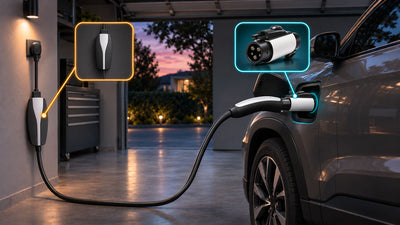
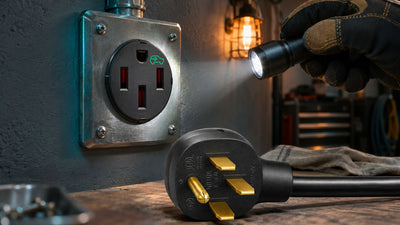
WenStorm's 32A portable Level 2 charger works with either connector type when you select the matching version. It plugs into a suitable 240V NEMA 14-50 outlet on a dedicated 50A circuit, delivering up to 7.7 kW without hardwiring.
Already have a compatible charger? Keep it if it meets your daily charging needs.
Which IONIQ 5 do you drive?
Choose your model year to get the correct charging connector. Both options are the same 32A portable charger.

WenStorm 32A Portable — J1772
2022–2024 U.S. IONIQ 5 and 2025 IONIQ 5 N.

WenStorm 32A Portable — NACS
2025 non-N IONIQ 5 and all 2026 U.S. IONIQ 5, including N.
32A / up to 7.7 kW · 25 ft cable · A suitable NEMA 14-50 outlet on a dedicated 50A circuit is required. Verify your physical charging port if the model year or country of sale is uncertain.
Which situation describes you?
Pick the row that matches your IONIQ 5; the right next step follows.
| Your situation | Right next step |
|---|---|
| 2024 US IONIQ 5 or earlier model year (J1772 inlet) | Choose the J1772 variant of a 32A portable Level 2 charger. Direct connect to your J1772 inlet, no adapter needed. |
| 2025–2026 US IONIQ 5, non-N trim (native NACS inlet) | Choose the NACS variant. Direct connect for home Level 2 charging. For a J1772 AC station, use a compatible J1772-to-NACS AC adapter if needed; Hyundai's included CCS adapter is for DC fast charging and cannot be used for Level 2 AC. |
| 2025 Ioniq 5 N (documented J1772 exception) | Choose the J1772 variant for the 2025 IONIQ 5 N. Hyundai's 2026 IONIQ 5 N has a NACS port; confirm model year and physical charging inlet. |
| 2026 U.S. IONIQ 5, including IONIQ 5 N (NACS inlet) | Choose the NACS variant. It connects directly to the vehicle without a J1772 adapter for compatible AC home charging. |
| Already own a working Level 2 charger that meets your need | Keep using it if the connector fits your IONIQ 5 and it meets your driving needs. A 32A charger can cover typical overnight charging without matching the car's maximum onboard charging rate. |
| Only have 120V outlet access, no 240V install possible | Compatible Level 1 charging may meet short daily commutes on a suitable 120V circuit. For the vehicle connector, use J1772 on 2022–2024 U.S. IONIQ 5 and 2025 IONIQ 5 N; NACS on 2025 non-N and 2026 IONIQ 5 models. Confirm the outlet and current limits. |
Recall / safety-notice check: before following any overnight-charging advice, verify your specific VIN's current recall status at NHTSA's recall lookup and the Hyundai Owners portal.
How to identify your IONIQ 5's inlet
The right charger depends on which physical connector is on your vehicle's charging port — not the model badge. Two authoritative checks:
- Open the owner's manual for your specific model year. The AC charging-port diagram shows either a round 5-pin J1772 inlet or a slim oval NACS inlet. Both ports look superficially similar from a distance but the pin pattern and overall shape differ.
- Check the delivery paperwork / window sticker. The 2025 non-N and 2026 U.S. IONIQ 5 models (including 2026 N) use NACS; the 2022–2024 IONIQ 5 and 2025 IONIQ 5 N use J1772. Hyundai confirms the included CCS adapter on NACS-native vehicles is for DC fast charging, not a J1772 AC adapter.
Inlet by model year and market

| Model year + market | Inlet | Portable charger variant to buy |
|---|---|---|
| 2022–2024 US IONIQ 5 (all trims) | J1772 | J1772 variant |
| 2025 US IONIQ 5 (non-N trims) | Native NACS | NACS variant |
| 2025 US Ioniq 5 N | J1772 (documented exception) | J1772 variant |
| 2026 US IONIQ 5 (including IONIQ 5 N) | Native NACS | NACS variant |
| IONIQ 5 in markets outside US (EU, Canada, AU, etc.) | Varies by market and MY | Verify your specific inlet with Hyundai in your market before buying; US guidance may not apply. |
Why the IONIQ 5's onboard charger matters for your choice
The IONIQ 5's onboard charger (OBC) is rated at 10.9 kW maximum AC per Hyundai's documented specification (verify in your model-year owner's manual; some trims and markets differ). At 240V, that corresponds to roughly 45A continuous. In practical home-charging terms:
- A 32A portable EVSE (such as WenStorm's) delivers 7.68 kW — below the vehicle's 10.9 kW acceptance ceiling, but comfortably sufficient for typical overnight charging on daily driving.
- A 48A hardwired EVSE on a dedicated 60A circuit delivers 11.5 kW — above the vehicle's 10.9 kW ceiling, so the vehicle caps at 10.9 kW. The practical difference versus 7.68 kW is about 50% more power delivered per hour, which matters only if your parking window is tight or you regularly need same-day depleted-to-full turnaround.
Home circuit and EVSE options
Option 1: Level 1 on a dedicated 120V circuit (all IONIQ 5 model years). A standard NEMA 5-15 outlet on a dedicated branch circuit delivers approximately 1.4 kW of continuous charging. For a driver whose typical daily commute is under 30 miles, Level 1 overnight (8+ hours) can cover daily driving. The IONIQ 5's charging screen will show the actual draw once connected.
Option 2: NEMA 14-50 plug-in Level 2 with a 32A portable EVSE (recommended for most IONIQ 5 owners). A NEMA 14-50 outlet on a dedicated 50A branch circuit permits up to 40A continuous EV charging under NEC Article 210 (continuous-load sized at ≥125% of the continuous current). A typical plug-in 32A EVSE delivers 7.68 kW. For most IONIQ 5 drivers with typical daily mileage and 8+ hour overnight parking, this is more than enough.
Option 3: 48A hardwired Level 2 on a dedicated 60A circuit. Delivers the full 10.9 kW the IONIQ 5's OBC accepts (capped at the vehicle's limit, not the EVSE's 11.5 kW rating). WenStorm does not sell a hardwired 48A product today; this is where third-party hardwired options would apply. For most IONIQ 5 owners, 48A hardwired is over-provisioned for daily driving.
When the WenStorm 32A portable is NOT the right fit for your IONIQ 5
- You already own a working Level 2 charger that meets your daily need. Keep what you have. The IONIQ 5's 10.9 kW OBC means any 32A J1772 EVSE already delivers typical overnight charging. No replacement needed unless you want a second location (travel kit, workplace, friend's garage).
- You need the full 10.9 kW rate (approximately 45A continuous). A 32A portable will cap at 7.68 kW. For the vehicle's full OBC rate, a hardwired 48A EVSE on a dedicated 60A circuit is required (the vehicle caps at its own 10.9 kW limit, below the EVSE's 11.5 kW rating). WenStorm does not sell a hardwired 48A product today; the Hyundai Home Charger (Hyundai's own hardwired option) or a comparable third-party unit covers this spec.
- You only have access to a 120V outlet. The 32A portable requires 240V on a NEMA 14-50; it will not operate on a standard household outlet. For 120V-only use, choose appropriately rated Level 1 equipment. A typical 15A household circuit is limited to 12A continuous EV charging. Do not assume a fixed 16A charger is appropriate for a 15A outlet.
- You rent and cannot install a 240V outlet. A portable 32A EVSE is portable in the physical sense but still requires a dedicated 50A circuit. If no NEMA 14-50 outlet is accessible with landlord permission, Level 1 on an existing 120V dedicated circuit may be the practical answer; some employers also offer workplace Level 2 charging.
- You need to extend reach between the EVSE and your parking spot. A longer portable EVSE is not a NEMA 14-50 extension. See our EV Extension Cable Buyer's Guide for the vehicle-side extension path and its manufacturer-permission requirements.
- You own in a market outside the US. This guide covers US model years and inlets. Hyundai's charging equipment, inlet types, and recall status vary by market. Verify locally before buying.
Related Reading
- J1772 vs NACS: What's Actually Changing in 2026 — connector-standard transition context for the broader EV market
- One EV Charger for NACS and J1772 Cars: 4 Home Options — if your household also has a Tesla or other NACS vehicle
- EV Extension Cable Buyer's Guide — if the EVSE doesn't quite reach your parking spot
Frequently Asked Questions
How do I know which inlet my IONIQ 5 has?
Check the AC charging-port diagram in your owner's manual for your specific model year, or inspect the port physically. A J1772 inlet is a round 5-pin connector; a NACS inlet is a slim oval. 2022–2024 U.S. IONIQ 5 and 2025 IONIQ 5 N use J1772; 2025 non-N IONIQ 5 and all 2026 U.S. IONIQ 5 (including N) use NACS. Hyundai can confirm your specific vehicle by VIN.
What charging rate can the IONIQ 5 actually accept?
Per Hyundai's documented specification, up to 10.9 kW on 240V AC — approximately 45A continuous. In practice, a 32A portable EVSE (7.68 kW) delivers below this ceiling but covers typical daily driving overnight. A 48A hardwired EVSE on a dedicated 60A circuit delivers the full 10.9 kW the vehicle will accept.
Can I use a Tesla Mobile Connector on an IONIQ 5?
Not directly. The Tesla Mobile Connector has a NACS vehicle-side head. For a 2024-and-earlier US IONIQ 5 or the 2025 Ioniq 5 N (both J1772 inlet), you would need a compatible NACS-to-J1772 AC adapter; verify permitted use under the vehicle and EVSE manufacturers' instructions. For a 2025 non-N or 2026 U.S. IONIQ 5 (native NACS port), the Tesla Mobile Connector physically fits — but Tesla's Mobile Connector owner's manual contains specific restrictions; verify permitted use with your specific equipment's documentation before relying on it. The simplest home-charging choice is a portable EVSE whose connector matches the vehicle without unnecessary adapters.
Does the IONIQ 5 N use J1772 or NACS?
The 2025 U.S. IONIQ 5 N has J1772 for home AC charging, while the 2026 U.S. IONIQ 5 N has native NACS. Check your car's charging port and model year before choosing a portable charger.
Sources
- Hyundai — NACS adapter FAQ (2025 IONIQ 5 N exception and CCS DC adapter).
- Hyundai — 2026 IONIQ 5 N (native NACS charging port).
- Hyundai — 2025 IONIQ 5 (NACS for the standard IONIQ 5).
- Hyundai Owners USA portal — authoritative for your specific VIN's charging specifications, included equipment, and recall status.
- Hyundai 2025 IONIQ 5 owner's manual — charging-current selection (ICCB) — authoritative for the vehicle's current-selection guidance; Hyundai documents that the appropriate setting depends on the available supply and environment, and does not establish a universally safe default for an unknown circuit.
- Your Hyundai IONIQ 5 owner's manual for your specific model year — authoritative for AC charging-port diagram (J1772 vs NACS) and the vehicle's documented AC acceptance rate.
- Hyundai IONIQ 5 US product page — authoritative for current trim lineup and documented charging specifications.
- NHTSA — Recalls VIN lookup — authoritative for active recalls affecting a specific VIN.
- NEC 210.19(A)(1) and 210.20(A) — Continuous-load sizing (branch circuit ≥ 125% of continuous current). National Electrical Code, current edition; consult your local Authority Having Jurisdiction for the adopted edition.
- NEC Article 625 — EV charging system installation provisions.
- WenStorm — Level 2 Portable EV Charger product page (J1772 variant for 2022–2024 U.S. IONIQ 5 and 2025 IONIQ 5 N; NACS variant for 2025 non-N and all 2026 U.S. models).