WenStorm vs ChargePoint Home Flex: Portable vs Smart Wall Charger
Home Flex is a wall-mount with an app and up to 50A hardwired output. WenStorm is a portable that plugs into a NEMA 14-50 at 32A. Six configurations vs one — and six scenarios that pick each.

By Nathan Park — WenStorm
ChargePoint is one of the most recognized brands in US EV charging. Their Home Flex sits at the connected end of the residential market — a wall-mounted Level 2 with configurable amperage, the ChargePoint app, and six SKU configurations covering NEMA 14-50 plug, NEMA 6-50 plug, and hardwired setups, each available in J1772 or NACS. WenStorm sells a single portable Level 2 SKU with a fixed NEMA 14-50 plug and connector-integrated electronics.
Any comparison that treats these as two versions of the same product misses the design-category difference. This article walks through the specs from each manufacturer's documentation, the scenarios that route to each, and where the tradeoffs actually matter.
Two Different Product Categories
ChargePoint Home Flex is a wall-mounted Level 2 EVSE. It's designed to be bolted to a wall or an outdoor pedestal and used as the household's permanent charging station. Plug-in variants (NEMA 14-50 or NEMA 6-50) can be unplugged and moved to another compatible outlet if you relocate, but the unit is a bracket-mounted wallbox — not a travel-friendly cordset. Hardwired variants skip the receptacle entirely and connect directly to a branch circuit.
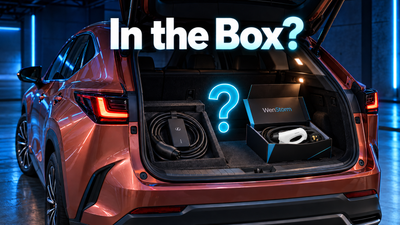
WenStorm Level 2 portable is a plug-in-only EVSE with electronics integrated into the connector handle. No wall bracket, no drilled mounts, no permanent installation. Plugs into an existing NEMA 14-50 receptacle on an adequate dedicated circuit. Designed to be carried between properties or packed in a trunk for travel.
Both categories are legitimate — they solve different problems.
2026 US Comparison
Specs come from each manufacturer's currently published documentation. ChargePoint Home Flex specs are drawn from ChargePoint's Home Flex datasheet and installation guide. WenStorm specs are drawn from the WenStorm product page and current warranty policy. Verified 2026-07-24.
| Spec | WenStorm Portable | ChargePoint Home Flex |
|---|---|---|
| Design category | Portable, plug-in only, no wall-mount hardware | Wall-mounted EVSE; plug-in or hardwired variants |
| Configurations sold | Single SKU — choose J1772 or NACS at order | Six configurations: J1772 and NACS versions of NEMA 6-50, NEMA 14-50, and hardwired |
| Max output | 32A / 7.7 kW at 240V (fixed) | Configurable up to 50A hardwired (up to 12 kW at 240V). Plug-in variants are limited to 32A or 40A depending on configuration |
| Connector | J1772 or NACS (choose at order) | J1772 or NACS — available in plug-in AND hardwired configurations |
| Plug or hardwire | Fixed NEMA 14-50 plug | NEMA 14-50 plug, NEMA 6-50 plug, or hardwired |
| Cable length | 25 ft | 23 ft (per ChargePoint datasheet) |
| Weight (unit) | Not published on product page (portable/handheld form factor) | 13.8 lb (per ChargePoint datasheet) |
| Electronics location | Integrated in connector handle (car end) | Wall-mounted control unit; cable extends to the connector |
| WiFi / app | No app | Yes — ChargePoint app with scheduled charging, kWh reporting, network integration, Alexa voice control |
| Certification | ETL Listed | UL / cUL Listed to UL 2594 and UL 2231-1/-2; ENERGY STAR certified (per ChargePoint datasheet) |
| Warranty | 2 years per current policy | 3-year parts warranty (per ChargePoint) |
| Price (USD) | $219.99 | Varies by configuration — verify current pricing at store.chargepoint.com |
| Installation | No new charger installation is normally needed when a suitable, code-compliant NEMA 14-50 outlet and dedicated circuit already exist | Wall mounting required; electrician needed for hardwired variants and typically recommended for plug-in variants + panel work |
| Portability | Yes — designed to be carried between properties and packed for travel | Wall-mounted and relocatable (plug-in variants can be unplugged and moved to another compatible outlet), but designed as stationary equipment — less travel-friendly than a cordset portable |
Two things worth naming from this table.
The 50A ceiling is a hardwired configuration, not a plug-in one. ChargePoint's hardwired Home Flex reaches 50A on a properly sized circuit. Plug-in variants are limited to 32A or 40A depending on the configuration. The apples-to-apples plug-in comparison against WenStorm is 40A vs 32A (Home Flex 14-50 or 6-50 plug at 40A vs WenStorm 32A) — not 50A vs 32A.
Total installed cost varies more for Home Flex than for WenStorm. WenStorm's installed cost is effectively the hardware price when a compatible outlet already exists. Home Flex's installed cost depends on the configuration (plug vs hardwired), the wire run to the panel, the panel capacity, permits, trenching, and any service upgrade. Ranges span several hundred to several thousand dollars depending on the specific installation. Get an electrician quote for your situation.
Circuit Sizing (Home Flex)
Circuit-size requirements for Home Flex depend on the configured output, per ChargePoint's installation guide:
- 32A output — a properly sized 40A circuit
- 40A output — a properly sized 50A circuit (plug-in variants top out here)
- 48A output — a properly sized 60A circuit (hardwired)
- 50A output — a properly sized 70A or 80A circuit (hardwired)
WenStorm at 32A requires at least a properly sized 40A circuit (the fixed NEMA 14-50 receptacle it plugs into is on a 50A circuit in normal residential installations). In all cases, the receptacle, breaker, conductors, and installation must comply with applicable code and manufacturer instructions. Have a qualified electrician confirm the specifics for your installation.
What ChargePoint Home Flex Does Well
Higher hardwired output ceiling. Hardwired at 50A on a 70A or 80A circuit, Home Flex supplies up to 12 kW at 240V. Meaningful for drivers with a very short parking window or very high daily mileage. Overnight, for average passenger EVs on an 8+ hour window, 32A is usually enough to replace a typical day's driving.
ChargePoint app integration. Home Flex ties into ChargePoint's broader ecosystem — the same app manages home charging and public charging on ChargePoint's network. Features include scheduled charging (useful for time-of-use tariff optimization), kWh reporting, session history, and Alexa voice control. If you already use the ChargePoint app for public stations, the home unit is a natural extension.
Six configurations to match your setup. J1772 or NACS in each of NEMA 6-50 plug, NEMA 14-50 plug, or hardwired lets you match the unit to your specific electrical situation and vehicle connector.
Multi-year residential brand presence. ChargePoint has been in US residential EVSE since before most competitors existed. That translates to third-party support content, established retail channels, and community familiarity.
What WenStorm Does Differently
Lower hardware price than any current Home Flex configuration. $219.99 for a certified 32A Level 2 portable. Home Flex hardware price varies by configuration — verify current pricing at store.chargepoint.com — but the WenStorm price is the lower-cost option in this comparison, and the delta widens further when Home Flex installation is added.
Portable form factor. No wall bracket, no drilled mounts. Plugs into an existing NEMA 14-50 and unplugs when you're done. Moves with you when you move properties. Plug-in Home Flex can be unplugged and relocated to another compatible outlet, but the ~14 lb wall unit with its pre-attached bracket isn't a cordset — it isn't designed for trunk storage or trip use.
No installation required when a compatible outlet exists. WenStorm plugs into a code-compliant NEMA 14-50 with no wall-mounting step. Home Flex requires wall mounting at minimum, and hardwired variants require licensed electrical work.
Connector-integrated design. WenStorm places the electronics inside the connector handle at the car end. Home Flex places the control unit at the wall. Practically: WenStorm coils and stores as a single-piece cable assembly, which matters most for travel and second-property use.
No app, no account — by design. WenStorm is standalone. Plug in, charge, unplug. Home Flex must be activated through the ChargePoint app to select the appropriate charging amperage and to use connected features; an unactivated station defaults to 16A output. If you want scheduled charging on WenStorm, use your vehicle's built-in charging schedule instead of a charger-side app.
Shared Plug-Side Considerations
For the plug-in variants of both products, both depend on a properly installed and maintained NEMA 14-50 receptacle. NEMA 14-50 charging is safe when the receptacle, wiring, breaker, and installation are suitable for the continuous load. Heat problems and receptacle degradation are more likely when connections are loose, worn, damaged, or improperly installed — not simply because the current draw is 32A or 40A.
Common risk factors to watch for:
- Worn or loose receptacle contacts
- Undersized conductors relative to the circuit rating
- Improper terminal torque on the receptacle's screw connections
- Low-quality or residential-grade receptacles used in high-continuous-load applications
- Damaged plugs from repeated plugging and unplugging
- Poor installation practices generally
According to Emporia's own NEMA 14-50 outlet-safety guidance:
“EV charging requires an outlet specifically designed for continuous, high-amperage loads, not just any 14-50 receptacle that happens to fit the plug. ... Documented cases of NEMA 14-50 outlet failures from EV charging show scorched outlets, melted plugs, and smoke damage.” — Emporia Energy, NEMA 14-50 Outlet Safety
The US Department of Energy is direct that EV charging falls under the National Electrical Code's continuous-load rules:
“EV charging infrastructure is considered a continuous load by the National Electrical Code (NEC). ... Electricians can inform homeowners whether their home has adequate electrical capacity for vehicle charging.” — US Department of Energy, Alternative Fuels Data Center
Hardwiring (a Home Flex option, not a WenStorm option) sidesteps this whole category of failure mode by removing the receptacle from the equation entirely. If plug-side reliability is a first-order concern for you, that's a legitimate reason to pick a hardwired wall-mount over any plug-in product.
Which One Fits Which Scenario
Scenario 1 — Long-term homeowner who wants a permanent wall installation with app control. ChargePoint Home Flex. Wall-mount design + app + network integration all match this profile. Budget for both hardware and installation.
Scenario 2 — You already use the ChargePoint app at public stations and want a unified charging experience. ChargePoint Home Flex. Same app for public and home sessions is genuine ecosystem value if you charge often on the ChargePoint network.
Scenario 3 — Your EV can accept more than 40A and your electrical installation supports the selected Home Flex output. ChargePoint Home Flex hardwired at 48A or 50A on a properly sized 60A or 70A/80A circuit. The extra input power over any 32A or 40A plug-in charger is meaningful when the parking window is under 6 hours or daily driving regularly exceeds 200 miles.
Scenario 4 — You rent, or you might move within 5 years. WenStorm. A hardwired Home Flex stays with the property. A plug-in Home Flex can be uninstalled but isn't designed to travel between properties as a routine matter. WenStorm plugs into your rental's existing NEMA 14-50 (if one exists) and comes with you when you move.
Scenario 5 — You want the lower-cost option in this comparison for certified Level 2 home charging. WenStorm. $219.99 with no installation cost when a compatible outlet already exists. If Home Flex's app ecosystem and hardwired amperage aren't features you'll actively use, they're capability you're paying for and not using.
Scenario 6 — You want a home wallbox and a travel/backup charger. Both. A ChargePoint Home Flex for the daily home charge, plus a WenStorm portable in the trunk for travel, Airbnb, or as backup during Home Flex firmware or hardware issues. Total hardware cost is typically less than a second wallbox and gives you meaningful redundancy plus travel flexibility.
Frequently Asked Questions
Which is faster — WenStorm or ChargePoint Home Flex?
At 240V, WenStorm 32A supplies up to 7.7 kW; Home Flex hardwired at 50A supplies up to 12 kW; Home Flex plug-in variants are limited to 32A or 40A / up to 9.6 kW. Actual battery energy and miles-per-hour added depend on the vehicle's onboard charger, temperature, and state of charge. For most passenger EVs on overnight parking, 32A is usually enough to replace a typical day's driving; large-battery vehicles may take longer for a full charge.
Which is safer?
Both products make manufacturer-published safety-certification claims (see the comparison table for the exact wording each publishes). Certification alone does not establish that their weather protection, thermal monitoring, construction, or real-world performance are identical. The most consequential safety consideration for either plug-in product is the outlet — a receptacle suitable for continuous EV charging, correctly installed on an appropriately sized circuit, and periodically inspected. Hardwiring the Home Flex removes the plug interface from the equation entirely.
Does ChargePoint Home Flex require a ChargePoint account?
Home Flex must be activated through the ChargePoint app to select the appropriate charging amperage and use connected features. An unactivated station defaults to 16A output. Once configured, it can continue charging if Wi-Fi becomes temporarily unavailable, although scheduling, reporting, and remote controls depend on the connected service. WenStorm has no app and no account requirement — plug in and charge at the fixed 32A configuration.
Can WenStorm work with my Tesla?
Yes — WenStorm ships a NACS variant selected at order. ChargePoint also offers NACS in each of the six Home Flex configurations (NEMA 6-50 plug, NEMA 14-50 plug, and hardwired), so a NACS driver has options in both categories.
What's the total installed cost of a ChargePoint Home Flex?
Hardware price varies by configuration — verify current pricing at store.chargepoint.com. Installation cost ranges from several hundred to several thousand dollars depending on wire run, panel capacity, permits, trenching, and any service upgrade. Get an electrician quote for your specific installation before comparing total cost.
Which one is better for renters?
Depends on the outlet the rental provides. WenStorm is the lower-cost choice for renters who already have permitted access to a suitable NEMA 14-50 and want a charger that moves with them. ChargePoint Home Flex is generally not the renter answer — hardwired variants stay with the property, and even plug-in variants require wall mounting that most landlords won't approve without a lease amendment. See our apartment charging guide for the renter-specific playbook.
Bottom Line
ChargePoint Home Flex is a wall-mounted smart charger with the ChargePoint app, six configurations, and up to 50A hardwired output. WenStorm is a portable Level 2 with a fixed NEMA 14-50 plug, 32A output, and no app. The right pick depends on whether you value a permanent installation with connected features, or a plug-in charger that requires no installation and moves with you. Read each product's current documentation and get an electrician quote for any wall-mount installation before deciding.
Sources
- ChargePoint — Home Flex Datasheet (PDF)
- ChargePoint — Home Flex Pre-Installation Guide (PDF)
- ChargePoint — Home Charging Configuration Page
- ChargePoint — Home Flex Feature Documentation
- Emporia Energy — NEMA 14-50 Outlet Safety: What EV Owners Need to Know
- US Department of Energy, Alternative Fuels Data Center — Charging Electric Vehicles at Home
- WenStorm — Level 2 Portable EV Charger 32A NEMA 14-50 Product Page