Best Portable EV Charger Australia 2026: A Verified Buyer's Guide

By Nathan Park — WenStorm
Every portable EV charger buying guide sold in Australia this year compares essentially the same five specs: amperage, cable length, plug type, connector, and price. Almost none discuss the two specs that actually determine whether the unit is legal to sell, safe to insure, or right-sized for how Australian homes actually charge.
The market reality is that AU's portable EV charger landscape looks different from the US or UK. Different plug (AS/NZS 3112, not NEMA). Different connector (Type 2, not J1772 or NACS). Different compliance regime (RCM mark under EESS, not UL). Different home-charging behaviour (about 65% of home charging energy in Australia comes from solar sessions — no other market comes close). Any guide that skips these details is telling you how the charger performs in California, not in your carport.
Below: what actually matters when buying a portable EV charger in Australia in 2026, verified specs from six brands sold into the AU market, and where the honest 15A sweet spot lives for the median buyer.
What Actually Matters When Buying a Portable EV Charger in Australia
Five specs that decide whether the charger fits your life, plus one that most guides overweight.
- Amperage tier. 10A, 15A, or 32A. Determines your daily range added per hour. The gap between 10A and 15A is bigger than the gap between 15A and 32A for most owners.
- Plug type. AS/NZS 3112 in three sizes (10A pin, 15A pin, 20A pin) matches your outlet. Type 2 is the connector at the car end — that's the Australian AC standard on every modern EV.
- RCM compliance mark. Legally required under EESS for any charger sold or supplied in Australia. Also what your home and contents insurance provider will check if the charger ever causes damage. Non-negotiable.
- Cable length. 5m is the practical minimum for most driveway-to-outlet distances. Longer (7-10m) is worth having if your parking is separate from your outlet.
- Solar compatibility. In Australia specifically, whether the charger's amperage matches your solar array output determines whether daily charging is essentially free or requires topping up from the grid.
The spec most guides overweight: raw amperage. Pushing to 32A only pays back if your parking window is short or your daily driving is high. For a median commuter with an overnight window, 15A delivers everything the higher tiers do.
The Three AU Amperage Tiers (And Which One You Actually Need)
10A — 2.4 kW, ~12–14 km per hour
Plugs into any household GPO. Cheap portable chargers at this tier start around $212 AUD (INCHARGEx on sale) and top out around $350. Delivers 100-140 km of overnight charging on a 10-hour window.
Works for: owners who drive under 60 km a day and always park at home overnight.
Doesn't work for: anyone with a commute over 80 km, occasional longer weekend drives, or any driving pattern that starts Monday below 30% state of charge. Also worth noting: standard 10A powerpoints are rated for intermittent loads under AS/NZS 3112 — running 8-10 hours of continuous EV draw through one is legal but pushes the socket. Most electricians recommend a dedicated 15A outlet if you're doing it every night.
15A — 3.5 kW, ~20 km per hour (the sweet spot)
Requires a 15A outlet — the larger-earth-pin socket common in garages, workshops, and caravan parks. Install cost for a new 15A outlet on a dedicated circuit runs $200-$400 in most metro areas. Portable chargers at this tier are $349-$499 AUD.
Works for: the median AU EV owner. Twenty kilometres per hour of charging over a 10-hour overnight window is 200 km of daily range added. That covers essentially every commute in the country, plus meaningful buffer for winter cabin preheat and errands.
Independent of the marketing, this is where most buyers should sit. Not the 10A GPO that dealer briefings implicitly assume. Not the 32A three-phase wallbox the wallbox brands push. The 15A dedicated outlet paired with a compliant portable is where the buyer-decision math converges for daily driving under about 130 km.
32A single-phase — 7 kW, ~40 km per hour
Requires a dedicated 32A circuit and outlet — usually a CEE 3-pin or blue commando socket. Effectively the same install cost as a wall-mounted Type 2 wallbox once you're pulling a new circuit. Portable chargers with a 32A tail run $389-$700+ AUD.
Works for: high daily driving (over 130 km), households with a short parking window (park at 11 PM, out at 6 AM), or two EVs sharing one outlet.
Doesn't work for: anyone with an older AC EV where the onboard charger caps at 7 kW. The BYD Atto 3, for example, ceiling-limits its own charging on single-phase to 7 kW regardless of what the outlet supplies. In practice, that means the 32A tier is only worth the extra install cost if you have a modern EV that can accept the full 7 kW and you need same-hour charging speed.
Connector — Type 2 Is the Answer
Australia standardised on Type 2 (IEC 62196-2, sometimes called Mennekes) as the mandated AC connector, and CCS2 as the DC fast-charging standard. Every modern EV sold in Australia — Tesla Model Y, BYD Atto 3, Sealion 7, MG4, Zeekr 7X, Kia EV5, Deepal S07, Xpeng, GWM Ora, Polestar — uses Type 2 for AC.
There is no credible push toward NACS adoption in Australia. Tesla itself sells Australian Model 3 and Model Y with Type 2 + CCS2, not NACS. If a portable EV charger sold into Australia advertises a J1772 or NACS connector without a Type 2 option, it's a US-market product that shouldn't be in your consideration set.
The Compliance Moat — RCM Mark + AS/NZS IEC 61851
Any electrical device sold or supplied in Australia falls under the Electrical Equipment Safety System (EESS). EV chargers specifically are classified as Level 3 risk equipment, which requires:
- RCM (Regulatory Compliance Mark) printed visibly on the product
- Responsible-supplier registration with the state regulator
- Certified independent-lab testing to AS/NZS IEC 61851-1 and AS/NZS IEC 61851-21-1 — the governing EVSE standards
- EMC compliance testing
Two footnotes:
AS/NZS 4777.1 is not the EVSE standard. It applies to inverter grid connection. Many vendor pages incorrectly cite it for EV chargers; it's not the correct reference. The correct standards for portable Level 2 chargers are the AS/NZS IEC 61851 series.
Personal imports of US portable chargers are a grey area. The physical plug mismatch usually stops it (NEMA plugs don't fit AS/NZS 3112 sockets), but even where an adapter works, the US unit lacks RCM certification. In an insurance claim scenario following an electrical incident, that missing certification will be raised by the insurer. Independent of the marketing, sourcing an AU-certified portable is the low-friction path.
Verified 2026 AU Portable EV Charger Comparison
The specs below are pulled from manufacturer product pages or authorised retailer listings. Where a manufacturer doesn't publish weight, the table says so.
| Charger | Amps | Connector | Plug | Price (AUD) | RCM |
|---|---|---|---|---|---|
| WenStorm 15A Type 2 PortableOur Pick | 15A / 3.5 kW | Type 2 | AS/NZS 3112 15A | See current AU price | ✓ Compliant |
| Jet Charge portable | 10A–32A modular | Type 2 | Modular tail kit | $479–$700+ | ✓ Compliant |
| EVSE Australia 32A portable | 32A / 7 kW | Type 2 | CEE 3-pin | ~$499 | ✓ Compliant |
| INCHARGEx 10A | 10A / 2.4 kW | Type 2 | AS/NZS 3112 10A | $212 (sale) – $299 | ✓ Compliant |
| Wallbox Pulsar Plus (AU) | 32A / 7.4 kW | Type 2 | Hardwired (not portable) | ~$1,199 | ✓ Compliant |
| Ultipower 32A portable | 32A / 7 kW | Type 2 | Modular | $389 (sale) – $499 | Verify per SKU |
Two observations from this table.
First, "portable" is used loosely across the Australian market. The Wallbox Pulsar Plus AU variant is a hardwired wall-mounted unit — legitimately a good product, but not portable in the sense a renter or driveway-charger buyer would use the word. Any comparison guide that lumps it in with the plug-in units is comparing categories that aren't actually competing.
Second, the price gap between the 10A entry tier ($212-$299) and the 15A sweet-spot tier is small — typically under $150. The gap between 15A and 32A modular is another $150-$300. For a median commuter, the incremental step from 10A to 15A pays back in daily range; the step from 15A to 32A rarely does unless your driving pattern demands it.
The Solar Bonus — AU's Uniquely Portable-Friendly Charging Economics
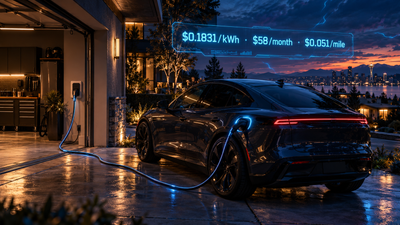
Approximately 40-43% of Australian homes have rooftop solar — the world's highest residential penetration. About 65% of the energy delivered to home-charged EVs in Australia comes from solar sessions.
In practical terms: if you already have residential solar and you can charge during daytime hours when the array is producing (weekend charging, work-from-home days, or with a smart load-management setup), your marginal charging cost approaches zero. Time-of-use tariffs stacked on top of solar export make Australian home-charging economics quietly the best in the world.
Amperage-to-solar-output matching matters more than most guides discuss. A typical 5-6 kW residential solar array can supply a 3.5 kW / 15A portable charger entirely from PV production during peak hours without exporting-and-reimporting at retail rates. A 7 kW wallbox running at full amperage often exceeds instantaneous solar output on most systems, which means part of the load comes from the grid at whatever your daytime tariff is.
Paradoxically, the "slower" 15A tier can be the more solar-friendly one on many typical AU systems. Independent of the marketing, this is the AU-specific reason to think twice before assuming higher amperage is always better.
Our Pick — WenStorm 15A Type 2 Portable
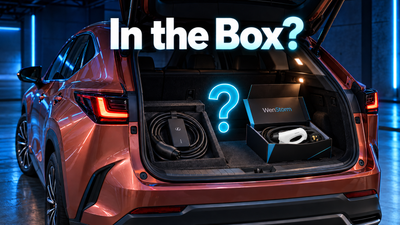
For the sweet-spot 15A tier, the buyer-decision case for the WenStorm 15A Type 2 portable is straightforward. Direct AU 15A plug, no adapter juggling. 3.5 kW output that matches typical residential solar arrays neatly. Compatible with every Type 2 EV on the Australian market — Atto 3, Sealion 7, Model 3, Model Y, MG4, Kia EV5, Zeekr 7X, and everything else. RCM-compliant for legal sale into the Australian market.
Already Have a Wallbox? Get the Type 2 Cable Instead
If your home already has a wallbox — either socketed (bring-your-own-cable) or you're using an untethered public station like some ChargeFox, Evie, or NRMA setups — the hardware you actually need isn't a portable charger. It's a Type 2-to-Type 2 mode-3 charging cable.
Tesla Owner with a Gen 2 Mobile Connector? The 32A Adapter Path
If you already own a Tesla Gen 2 Universal Mobile Connector (the one that shipped with older Australian Model 3 and Model Y deliveries), you don't need a new portable charger to reach the 32A tier. You need the right adapter to run the Gen 2 UMC off an industrial socket.
The WenStorm Tesla Gen 2 32A Industrial Adapter takes the Gen 2 UMC's tail and mates it to a CEE / blue commando 32A single-phase outlet — the standard 32A industrial socket used in most Australian garages and workshops. Same 7 kW ceiling as a dedicated 32A portable, but reuses hardware you already own.
When to Skip a Portable Entirely and Install a Wallbox
The buyer-decision case for a wallbox over a portable is real in three scenarios:
Daily driving over 200 km. A 15A portable at 20 km/hr caps out around 200 km overnight. If you regularly exceed that, a 7 kW wallbox is the next step up in the amperage stack.
Short overnight parking window. If you park at 11 PM and leave by 6 AM, that's a seven-hour charging window. At 15A, you get 140 km back. If your daily driving is higher than 140 km, the wallbox delivers more range per hour.
Multi-EV household. Two EVs sharing one dedicated outlet with load balancing pencils out to a wallbox because the split-amperage math works better on 32A wallbox circuits than on shared 15A portables.
In every other case — median commuter, single-EV household, overnight parking window over eight hours — the wallbox install cost ($1,100-$2,400 for single-phase 7 kW turnkey) is usually money spent on capacity you won't use.
Frequently Asked Questions
Is a portable EV charger legal in Australia?
Yes, provided it carries the RCM (Regulatory Compliance Mark) and complies with the AS/NZS IEC 61851 EVSE standards. Any charger sold or supplied in Australia without RCM certification is technically illegal to supply and may void your home insurance in the event of an electrical incident. Reputable brands sold through Australian retailers or Amazon Australia carry the mark.
What's the difference between 10A, 15A, and 32A portable EV chargers?
Amperage determines charging speed. 10A delivers ~12-14 km per hour, 15A delivers ~20 km per hour, and 32A delivers ~40 km per hour. The 10A tier plugs into any household GPO. 15A requires a 15A outlet (larger earth pin). 32A requires a dedicated 32A circuit and specialty outlet (CEE 3-pin or blue commando). For most commuters, 15A hits the sweet spot on cost-to-range.
Do I need Type 2 or Type 1 in Australia?
Type 2. Every modern EV sold in Australia uses Type 2 (IEC 62196-2 / Mennekes) for AC charging, standardised across the market. Type 1 (J1772) hasn't been sold on Australian-delivered EVs for a decade. NACS (Tesla's US connector) is not adopted in Australia — Tesla itself sells Australian Model 3/Y with Type 2.
Can I use a US-import portable charger if I have an adapter?
Not recommended. Beyond the physical plug mismatch (NEMA plugs don't fit AS/NZS 3112 sockets), US portables lack RCM certification — a legal requirement under EESS. In an insurance claim following an electrical incident, missing certification will be flagged. Also worth noting that most US portables run at 120V/60Hz for their Level 1 mode, which will not work at all on Australian 230V/50Hz supply.
What amperage matches my solar system?
A typical 5-6 kW residential solar array supplies about 3-5 kW of continuous PV output during peak hours. A 15A portable at 3.5 kW matches this range neatly — the entire charging load can run from solar production without exporting-and-reimporting at grid rates. A 7 kW wallbox often exceeds instantaneous solar output, meaning part of the load draws from grid. Match your charger amperage to your solar output for the lowest marginal charging cost.
The market reality is that the Australian portable EV charger category has matured. Compliant options exist across every amperage tier, most competitor products are honest about their specs, and the buyer-decision math converges cleanly for most owners at the 15A sweet spot. Two years from now this decision looks different if the AU market shifts toward NACS or if BYD's next-gen models push higher AC ceilings on single-phase. For today, the honest buying framework is: match your amperage to your daily driving and your solar array, insist on RCM compliance, and don't overpay for capacity you won't use.